Chana from the pod to the pantry
Harvesting, cleaning and deciding between whole chickpeas and dal are separate pieces of the work.
In this guide
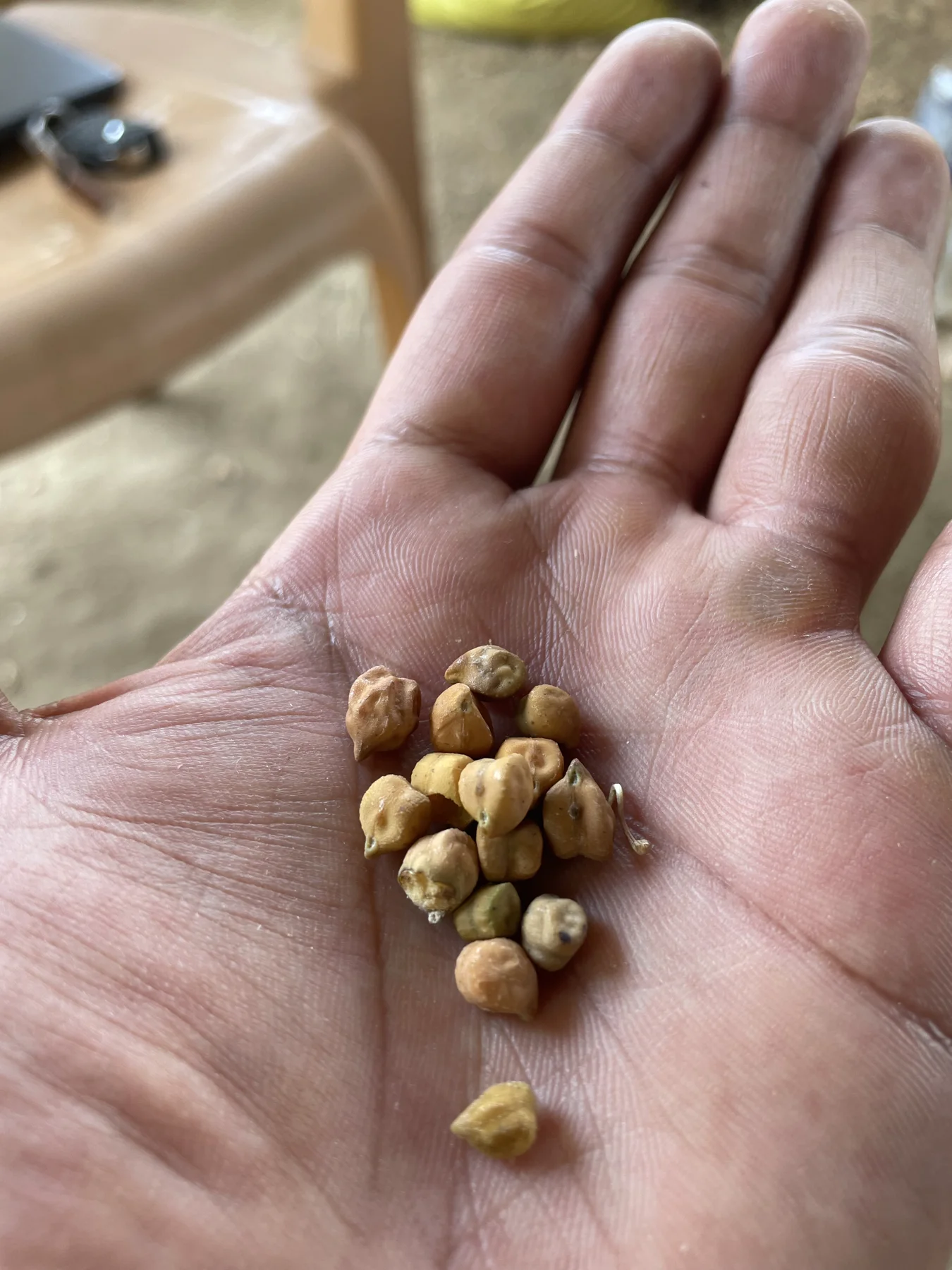
Whole chana and chana dal begin with the same crop inside a pod. The difference develops after harvest: seed is released and cleaned, then either kept whole or processed further. Following that work connects the crop in the field with the form used in a kitchen.
Read the pods, not only the date
A chana crop can mature unevenly. TNAU's Bengal gram seed-production guidance uses the colour of the majority of pods as a harvest indicator. This is guidance for seed production under its stated conditions; it is a useful reminder to examine pods, rather than a universal harvest date or a food-storage prescription. [1]
Walk through representative parts of the crop. Compare drier and later patches and open several pods to see the seed within. Record the unevenness. It gives context to a decision to wait or to organise harvesting in stages, even when the eventual notebook entry gives just one completion date.
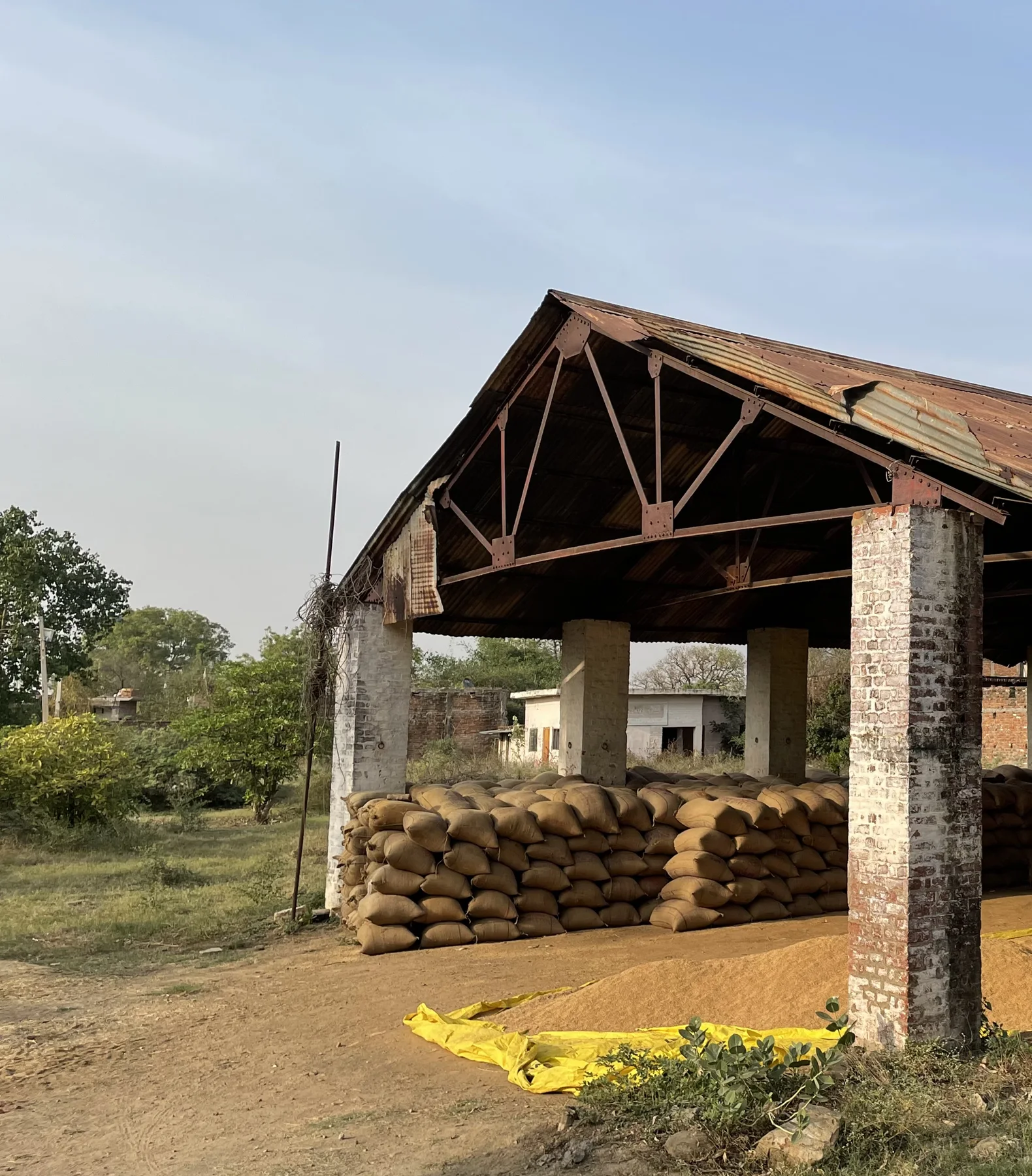
The farm's owner described uneven chana maturity and irrigation-related delays before the recorded cleaned quantity reached 1,950 kg. That quantity belongs to cleaned chana. It does not establish the weight of whole plants, the original uncleaned lot or a dal-milling recovery.
Separate the jobs after cutting
Threshing releases seed from harvested plants. Cleaning then removes pods, stalk pieces, dust and other foreign material. Drying addresses moisture. These names describe different jobs even when equipment combines some of them.
A bag of clean chickpeas represents a different stage from a weight of whole plants. Water removed in drying and material removed in cleaning help explain the change. If wet and dry lots were combined, their histories also become part of the comparison.
Whole chana and dal
TNAU's processing guidance describes pulse milling as a sequence involving cleaning, dehusking, splitting, separation and bagging. Removing the seed coat and splitting the seed produces dal. It also explains that repeated milling can produce broken material and fines, so a finished-dal weight is another distinct result. [2]
Before sending a lot to a mill, agree on the intended product. Ask whether whole seed, split dal, separated coat and smaller fractions will be returned or weighed separately. Keep food grain clearly distinguished from planting seed and retain any treatment information with seed lots.
Make the pantry easy to check
For food already prepared for dry storage, inspect the packaging and use clean, suitable, tightly closed containers. University of Minnesota Extension recommends checking stored foods for insects, keeping storage areas clean and using older supplies first. Its household advice includes dried beans and grain products. [3]
- Label the crop, processing form and packing date.
- Keep a new batch identifiable instead of repeatedly topping up an old one.
- Look for insects, damaged packaging or other deterioration when using it.
- If food is infested, follow the extension advice to discard it and inspect other susceptible supplies. [3]
A plain pantry label—whole chana or chana dal, a source and a date—carries the harvest story into the kitchen.
About this story
Owner reports describe uneven chana maturity, irrigation-related delays and a cleaned quantity of 1,950 kg. No whole-plant yield or dal recovery is inferred.
From the farm’s dated working notes.Sources & further reading
- TNAU · Bengal gram seed production: harvesting and grading Accessed 2026-10-23
- TNAU · Pulse processing and dal milling Accessed 2026-10-23
- University of Minnesota Extension · Pantry pests in stored food Accessed 2026-10-23