Chana: a harvest in its own time
Three varieties, uneven ripening and a harvest that unfolded over several weeks. A Rabi season in words and photographs.
Chana did not finish the season in one sweep. Some plants were ready to cut while others were still green. The harvest followed in stages: cutting, drying, threshing, then the final cleaning of the grain.
Across two fields and three varieties, the Rabi 2025–26 crop kept bringing us back for a closer look.
A closer look at the green
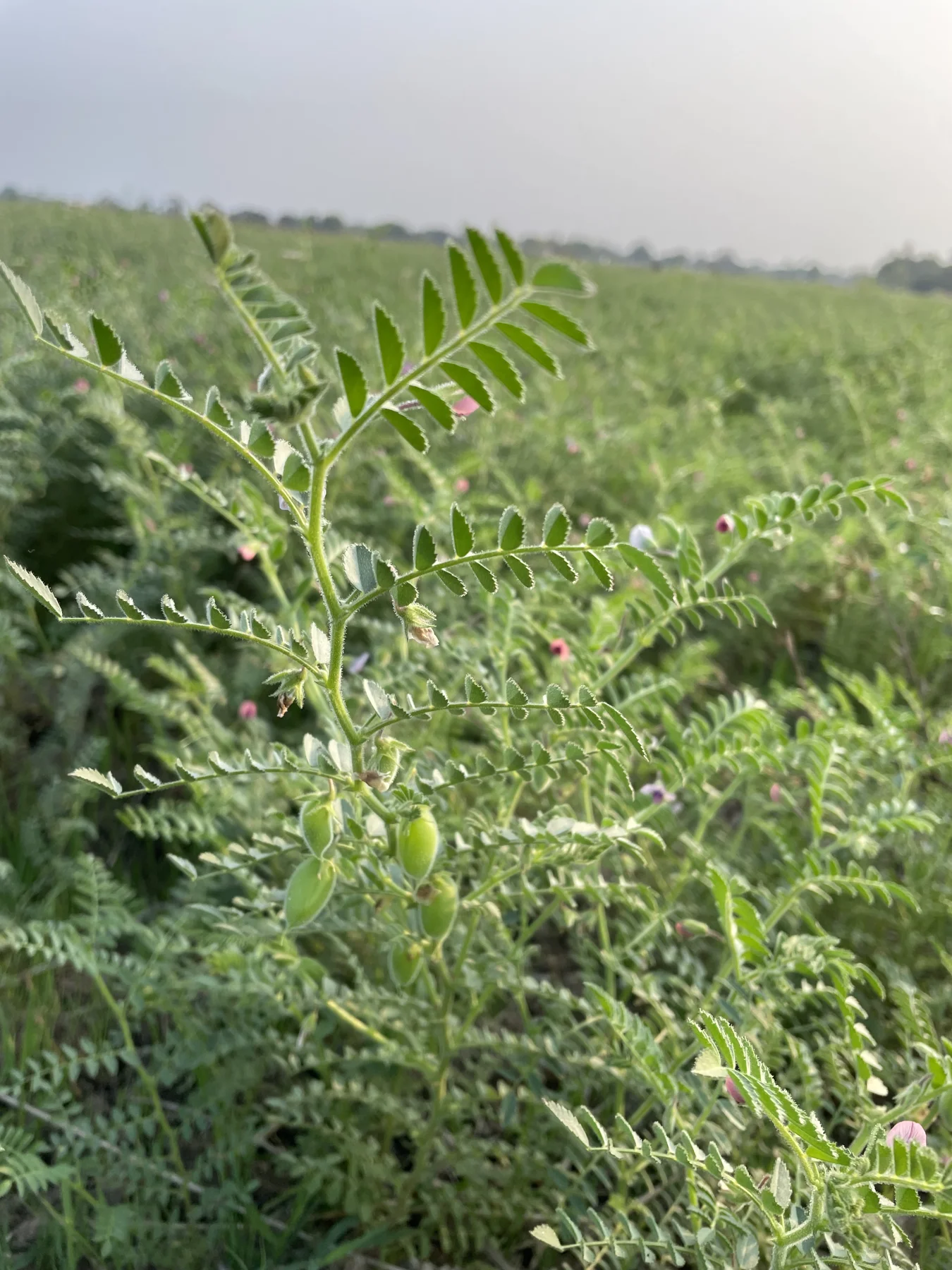
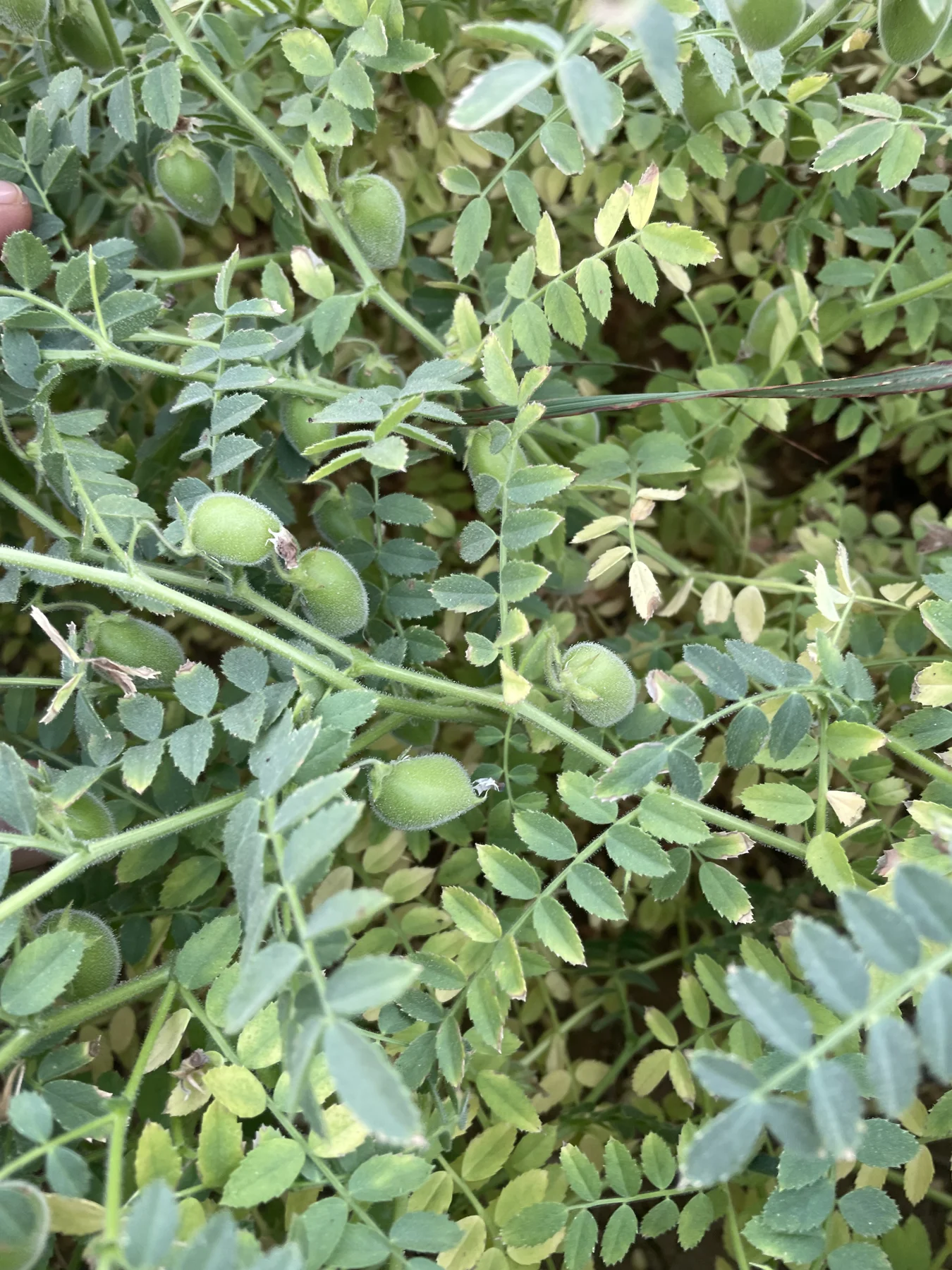
In the photographs, the crop is full of detail: small leaflets, pale flowers and green pods tucked among the stems. A wide field view gives a sense of the crop; a closer frame shows what is developing within it.
By February, most of the crop in one field appeared to be doing well. Pod filling was underway by the end of the month. But a small patch behaved differently: roughly 50 plants flowered, then put out fresh leaves and branches. We considered possible explanations without settling on a cause.
Elsewhere, a burst irrigation pipe let water into part of the crop. Unintended watering became part of the season’s story, with some patches remaining green later than others.


Three varieties to follow
We grew Daftari, Pusa Manav and Pusa 362. At harvest, we kept the varieties separate so we could follow each one from the field to the cleaned grain.
Pusa Manav made up the largest share of the cleaned grain. To understand how the varieties compare, we will also need to know the area planted under each.

The harvest finds its own pace
By mid-March, much of the chana was approaching maturity. A patch was set aside for green chana for the household, while other areas were left to finish ripening.
Manual cutting began in one field on 20 March. With light drizzle and cloud forecast, the decision was to start on the mature crop rather than leave it standing.
By 30 March, that field had been cut. The other was about 60% complete, with two plots still green after unintended irrigation. There was no single date when every part of the crop was ready.
From pods to cleaned grain
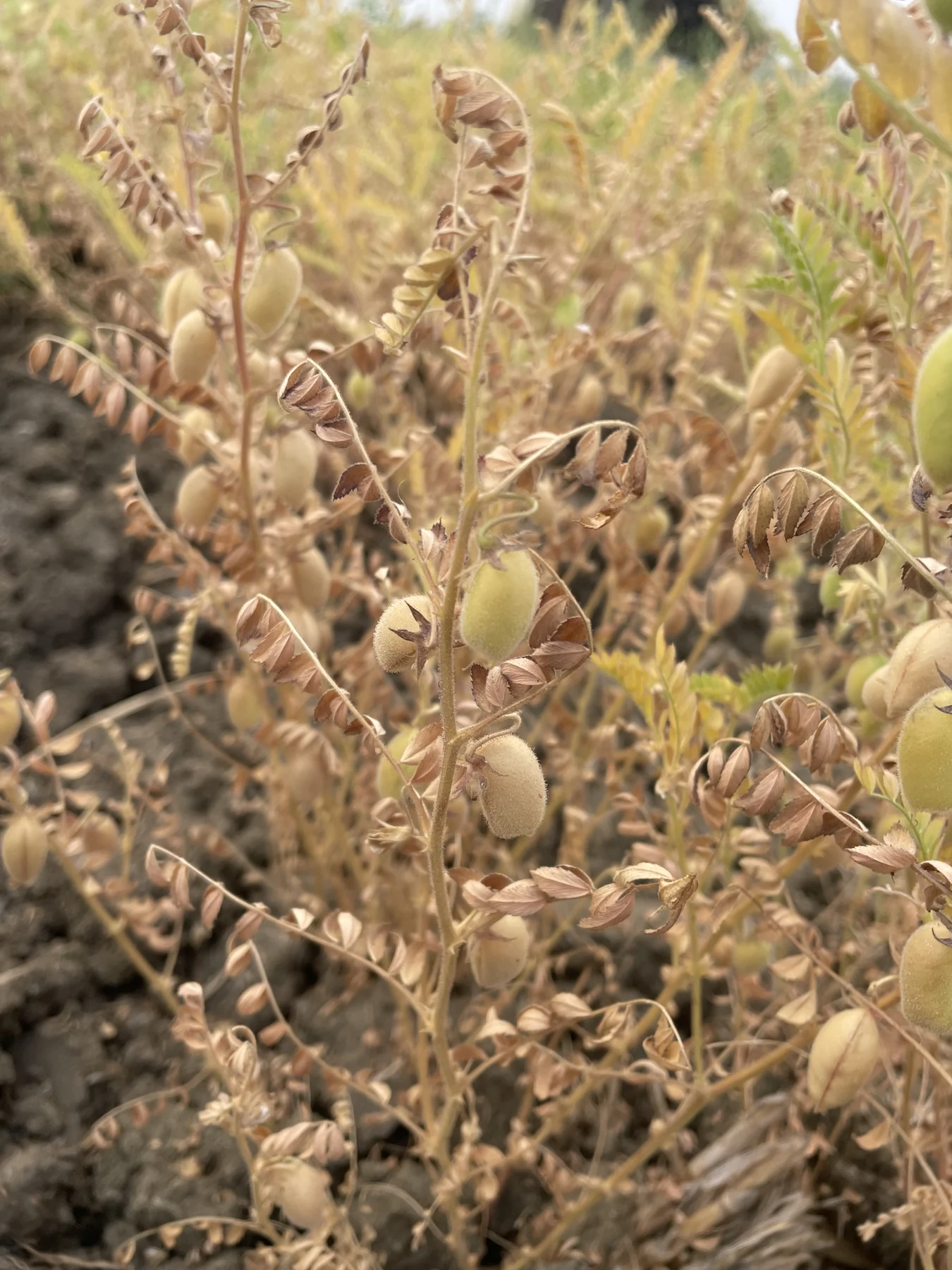
The pale pods and dry stems in the photographs show a different texture from the green crop. After cutting, the plants were left to dry before threshing.
The first major threshing took place on 1 April, covering the first field and part of the second. Further cutting, drying and threshing continued into the month. The final lot was threshed by 16 April; cleaning and winnowing followed.
By 18 April, the grain was cleaned and the final total was in: 1,950 kg, or 19.5 quintals, across the three varieties.

What stays with us
The total is one way to remember the season. The uneven patches are another: fresh growth after flowering, water arriving where it was not intended, and green plants still standing beside a crop ready to cut.
For the next chana season, those differences are worth following from the start. Following each variety from its planted area to its harvest will help us learn more next time. So will returning to the field and noticing what has changed.
The 1,950 kg of cleaned chana came at the end of that staggered work. Beside the total, the season leaves a more detailed memory: mature pods waiting for cutting, green patches still growing and the final lot reaching the thresher in April.
About this story
User-supplied Rabi 2025–26 narrative: Daftari, Pusa Manav and Pusa 362 grown across two fields; cutting began 20 March; final threshing by 16 April; cleaned grain total 1,950 kg recorded 18 April. Photographs supplied for this story; individual dates and varieties are not assigned to frames.
From the farm’s dated working notes.