One field, several harvest clocks
Green patches beside mature plants need closer inspection. A guide to mapping differences and keeping harvest decisions and records clear.
In this guide
In our chana season, cutting began while some patches were still green. Roughly 50 plants had flowered and then produced fresh leaves and branches; elsewhere, unintended water from a burst irrigation pipe became part of the crop's history. A single harvest date could not explain what was happening across those plants.
Map the difference before explaining it
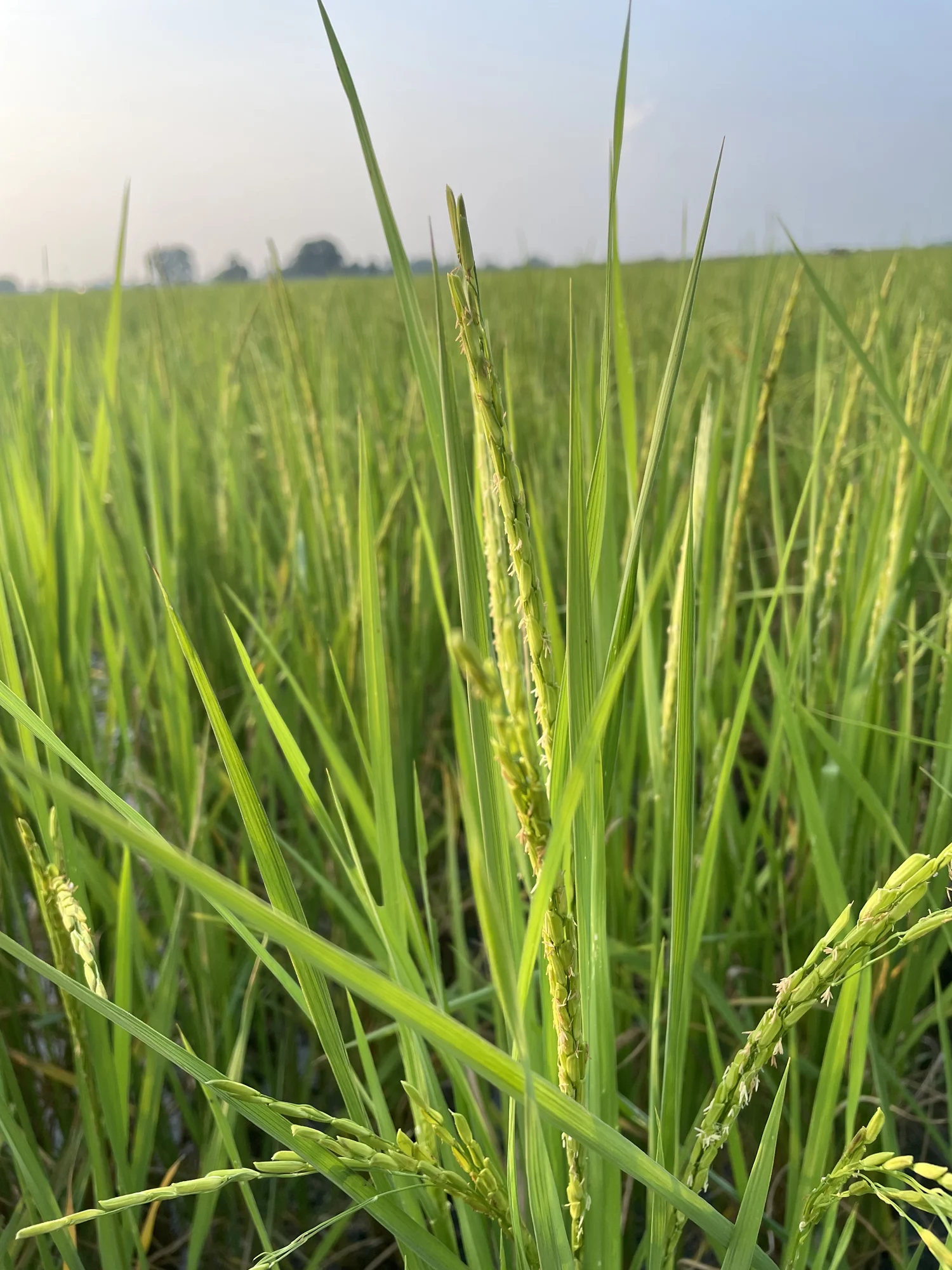
The first distinction is between adjoining crops with different histories and differences within the same crop. Variety and establishment date may explain why one stretch is ahead. A greener patch within an otherwise drying crop raises another set of questions.
Walk through typical areas as well as unusually green or dry ones. A simple map can show whether the pattern follows low ground, an irrigation incident or an establishment gap. It gives the next visit a place to begin without deciding the cause in advance.
Leaves are only part of the picture. In wheat, Minnesota Extension distinguishes flowering, grain filling and maturity as stages in a continuing sequence. Heads and grain help locate a plant within that sequence; a green canopy or one hard grain cannot represent the whole field. [1]
Chana can continue growing
Chickpea has an indeterminate growth habit: vegetative growth can continue after flowering begins. Montana State Extension explains that late rain can restart development, including flowering and seed set, and complicate harvest. A plant may therefore carry the signs of more than one stage at once. [2]
That biology offers a possible explanation to investigate in a green patch. It does not diagnose the roughly 50 plants in our story, whose fresh growth remained unexplained. Nor does the separate irrigation incident establish a common cause for every delayed plant. Following those areas separately preserves the differences that the season actually showed.
Separate maturity from drying
Three decisions can arrive at different times: seed has finished filling, a chosen harvest method can handle it, and the harvested lot is dry enough for its intended storage. Drying can remove water from mature seed; it cannot complete growth that immature seed missed.
Montana's chickpea guidance stresses seed colour, warns of green seed with early harvest and distinguishes harvest moisture from the lower moisture needed for longer storage. Its regional figures and machinery advice need local interpretation. Crop-appropriate inspection and measurement help an adviser decide how to handle the crop at hand. [2]
Perfect uniformity also has a cost. Philippine Rice Research Institute guidance warns against waiting for every rice grain to ripen, because grain can be lost while the last portion catches up. The practical question is a suitable harvest window across the crop. [3]
Questions for the green patch
- Is it still flowering, filling seed or drying down?
- How do its seeds compare with those in a typical mature area?
- Does its variety or establishment date differ?
- Does the pattern follow a known change in water or ground conditions?
- Could separate cutting preserve the identity of the different lots?
A harvest with several dates
Our chana cutting began on 20 March 2026 and final threshing extended to 16 April. In Khapli, about 70% had been cut by 9 April, with further drying before threshing. These are accounts of staggered work, not recommended waiting intervals.
Keeping the lots distinct lets those dates mean something: which crop was cut, which was still ripening, and what happened to each after it left the field.
About this story
Existing owner-authored Rabi 2025–26 stories record fresh growth after flowering in a small chana patch with unresolved cause, unintended irrigation in other patches, staged chana cutting/threshing and staged Khapli cutting/drying.
From the farm’s dated working notes.Sources & further reading
- University of Minnesota Extension · Wheat development and maturity Accessed 2026-10-23
- Montana State University Extension · Chickpea production Accessed 2026-10-23
- Philippine Rice Research Institute · Handle rice with care Accessed 2026-10-23