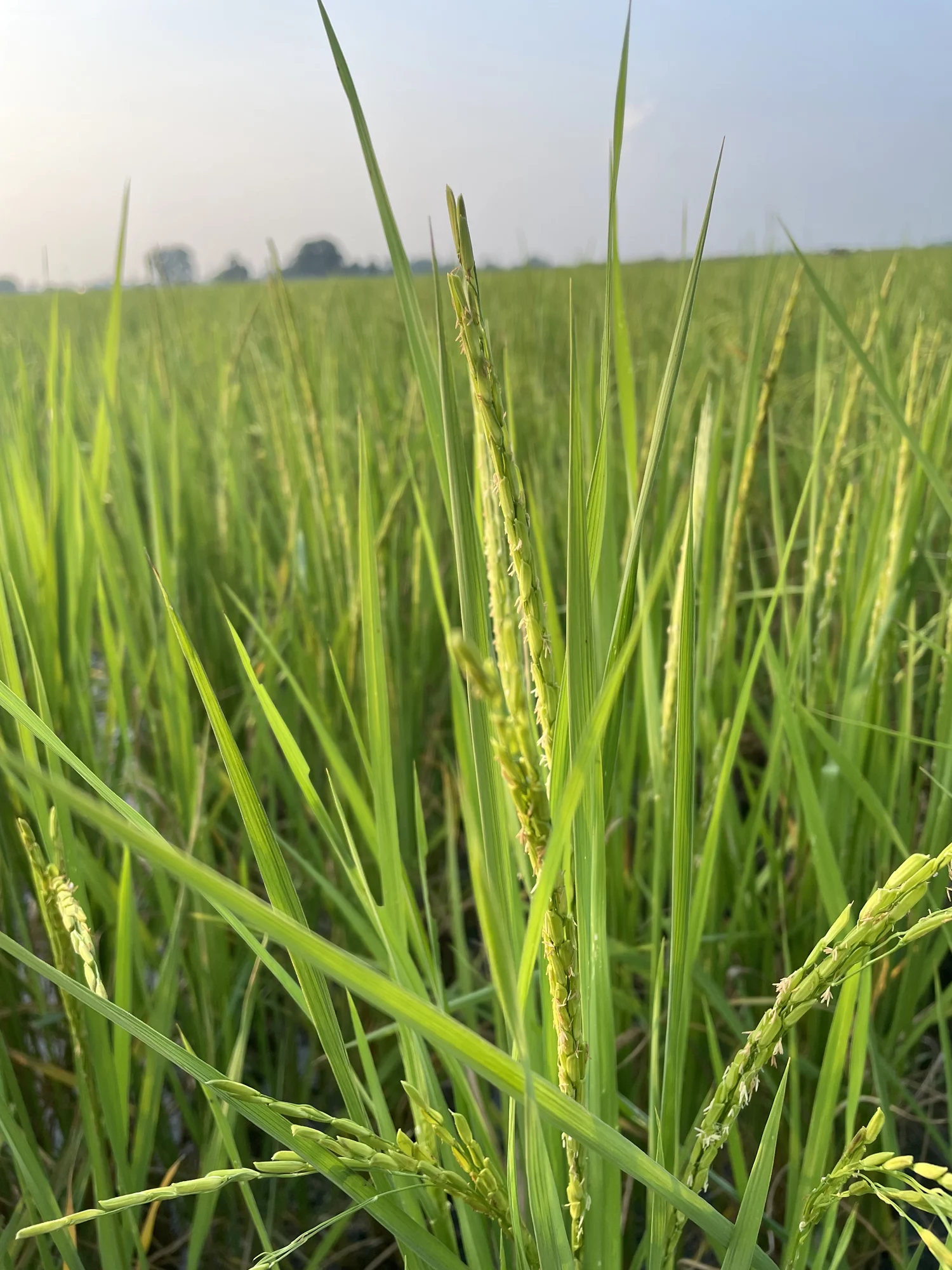
Choosing rice starts with the seed
What a variety name can tell you—and what to check before deciding what to grow.
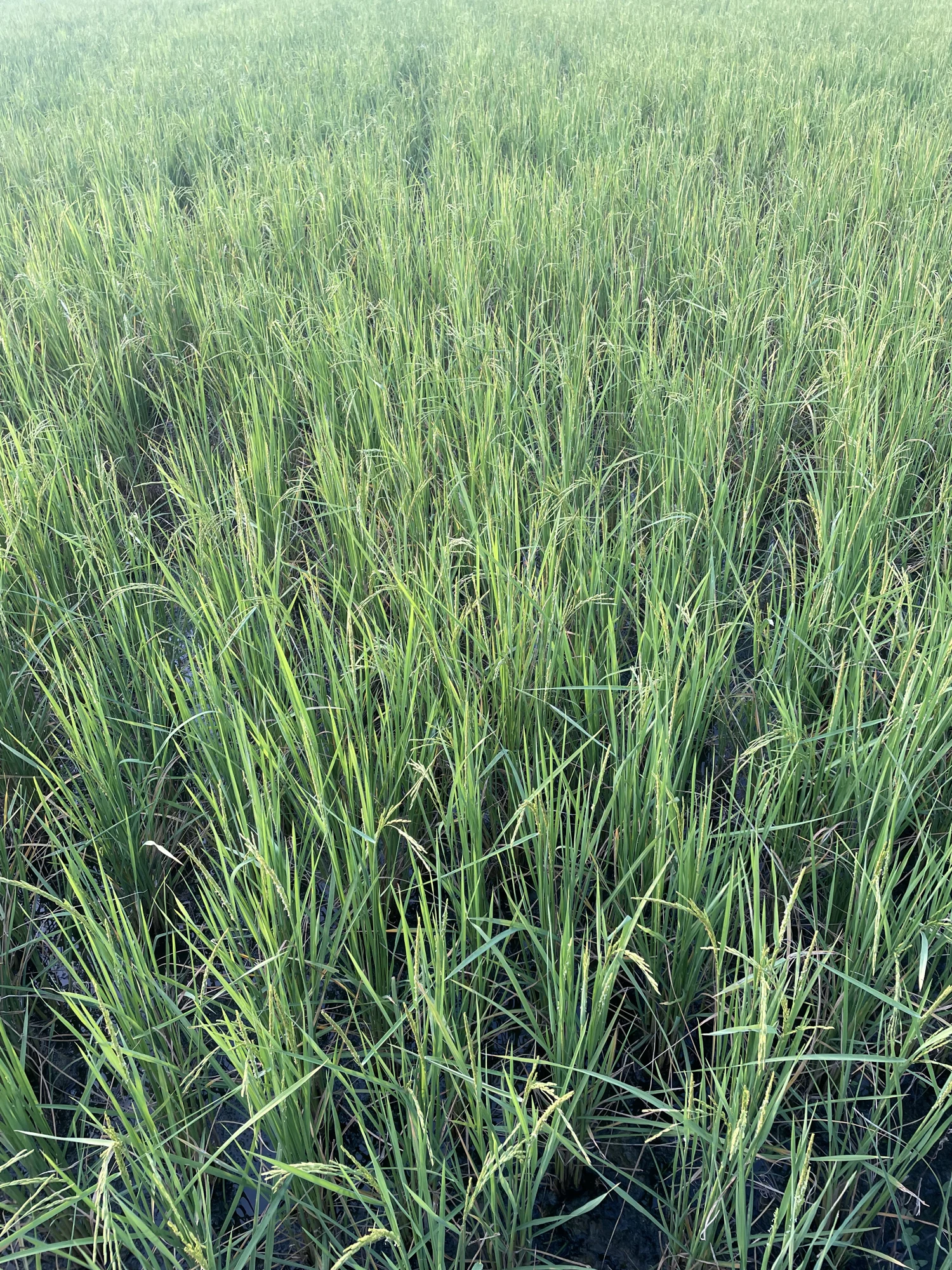
Navara and 1718 appear side by side in our rice notes, but their names leave different questions open. The archive calls one Navara red rice and uses a number for the other. Following both crops means knowing where the names came from as well as what happened in the field.
Begin with a clear identity
Keep the seed label, supplier details and batch reference. Shorthand that works in a farm notebook may leave questions later, especially when similar names or spellings appear.
Our October notes name Navara red rice and a rice crop known here as 1718. Navara had been harvested by 18 October; manual wild-paddy removal in 1718 was finished on 20 October. We use those names as they appear in the farm notes, without assigning an unconfirmed full cultivar name to 1718.
Ask about the growing season
Variety and environment both affect how long rice takes to develop. A name alone cannot tell you when a particular field will be ready to harvest. IRRI’s guide to the rice plant is a useful starting point for understanding those differences. [1]
When choosing seed, seek local recommendations for your growing conditions and season. Keep the seed documentation alongside the planting date so you can follow the crop from the beginning.
Learn from a season, carefully
Sowing, transplanting and harvest dates reveal how a variety moved through that season. A harvest weight becomes a yield only when the area it came from is known too.
One season can teach you a great deal about a field. Comparing varieties takes more care: weather, soil and management can all differ. A familiar name or a good-looking crop is a starting point for questions, rather than proof of a yield or quality advantage.
About this story
This guide draws on the sources below. It is not a report of a completed farm trial.
Sources & further reading
- IRRI · The rice plant and its ecology Accessed 2026-10-22