Crops / FIELD READING
How to read a field of rice
Tillers, flowering and filling grain: the changes to look for as rice develops.
Growing guide · 1 min read Crop & CanopyA life in growing
From tillering and flowering to harvest, follow the changes in a rice field and get to know the questions behind a variety name.
Oryza sativa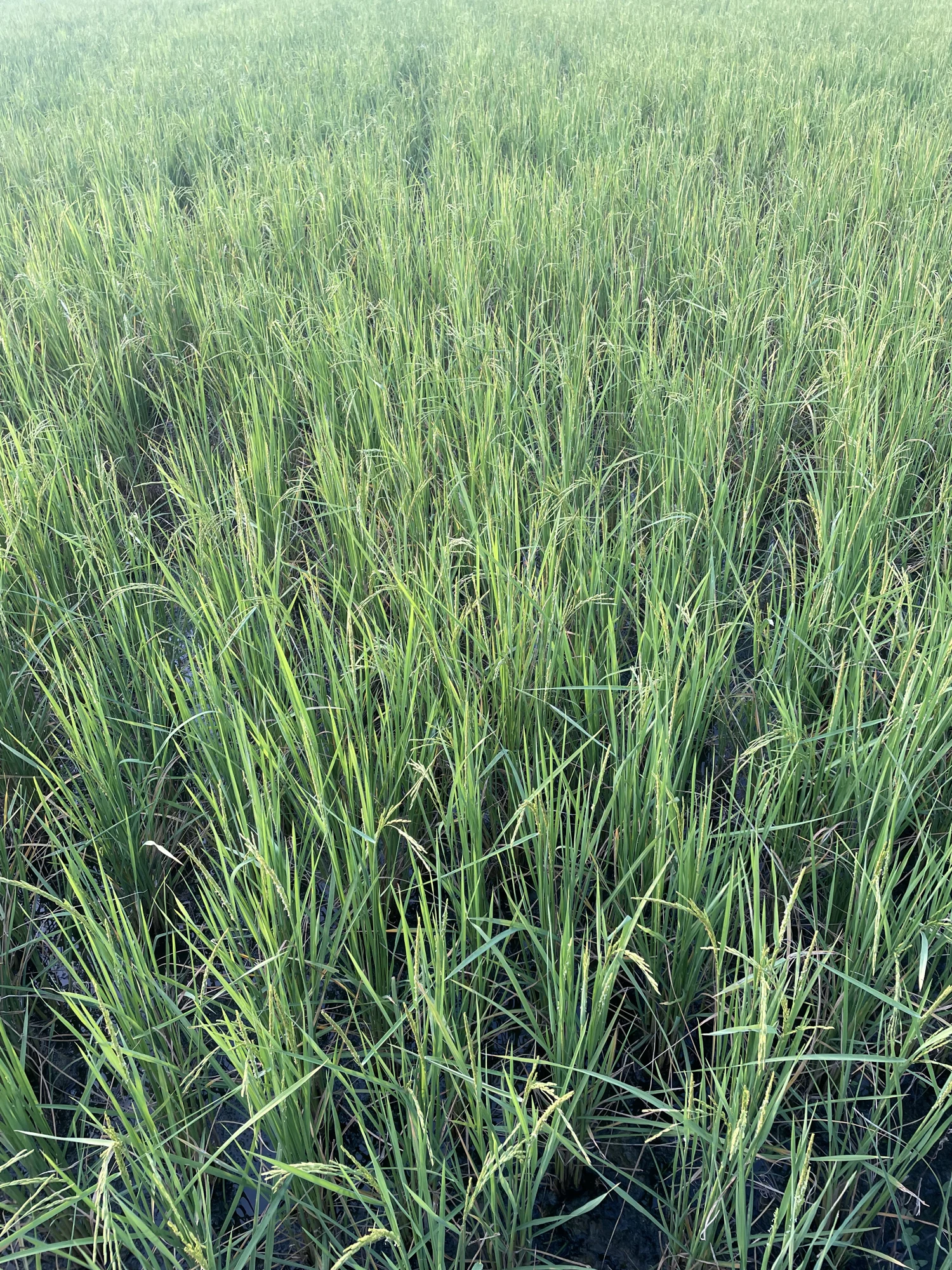
A rice field is made of plants at work on several levels: roots in the soil, tillers rising from the base and, later, panicles carrying the grain. The route into that field matters. Nursery-raised seedlings transplanted later begin differently from directly sown rice, where seed germinates in the main field. Then the green canopy changes again: stems lengthen, panicles emerge and soft grain gradually hardens. Our 2026 notes follow several rice crops through that changing landscape. There is water to manage, competition between the plants and weeds, and a harvest decision that becomes clearer only when you look inside the panicle.
Follow the stages. Their timing changes with the variety, weather and growing conditions.
A germinating seed sends out its first root and shoot. Seedlings may grow first in a nursery before being moved into the field, or establish where they were directly sown. The young crop needs suitable moisture and room to take hold.
Rice produces basal shoots called tillers, turning a small stand into a fuller canopy. Leaves supply energy for growth while roots explore the soil. Weed competition during establishment can leave the crop struggling to build that canopy.
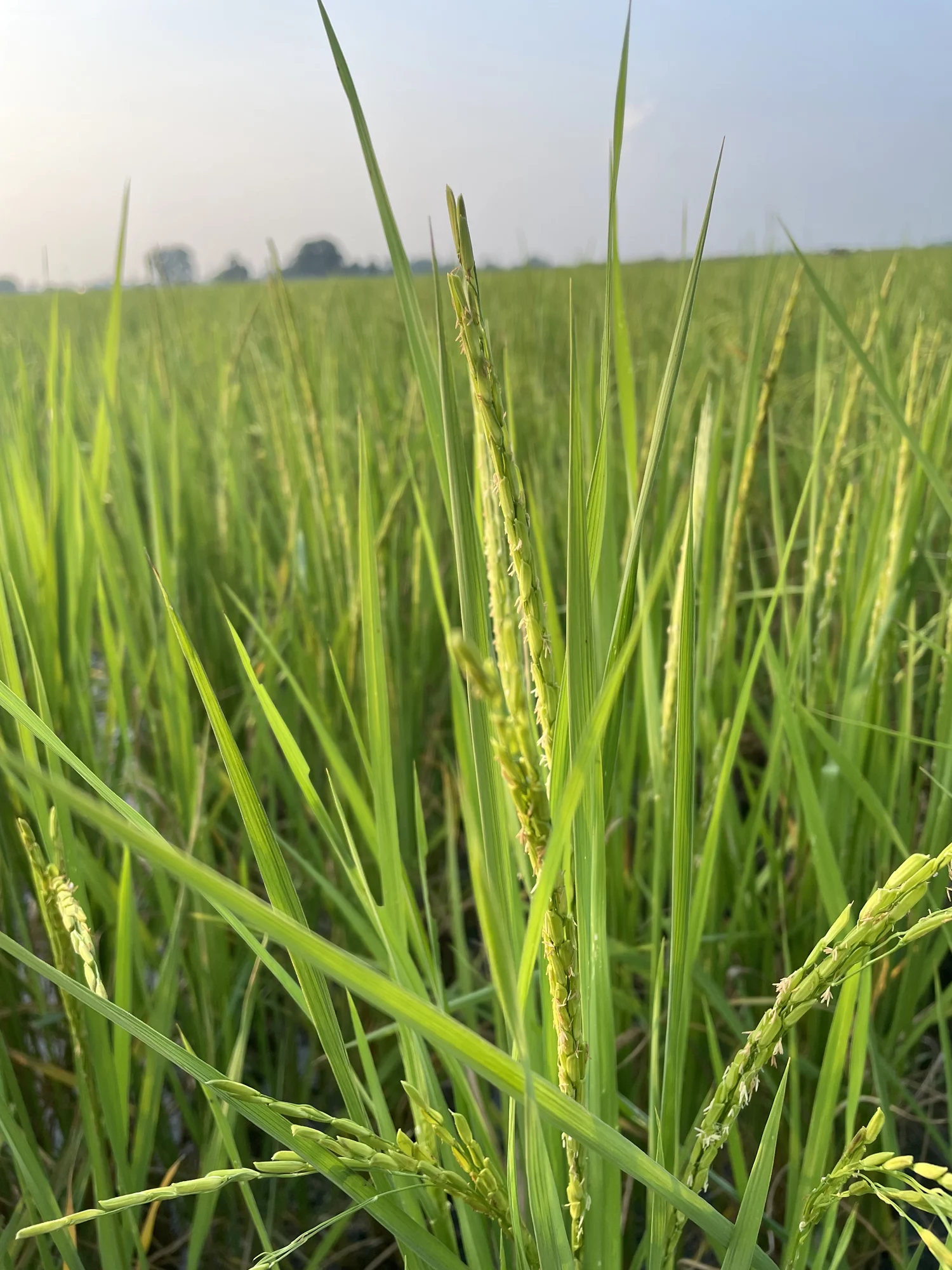
The developing panicle swells within the upper leaf sheath—the boot—before emerging at heading. Its small flowers open and release pollen. Successful flowering sets up the next stage, when the developing grains become the crop’s main destination for growth.
Grain contents begin watery, turn milky, then thicken through soft and hard dough as the grain fills. The crop loses green colour as it ripens. Harvest readiness combines grain development across the field with moisture and the intended harvest method.
Field levels, bunds, inlets and outlets shape where water goes. Establishment method and crop stage change the requirement; flowering deserves particular attention to avoiding water shortage. Heavy rain may make drainage the immediate job even in a rice crop.
Clean seed, a well-prepared field and timely weed removal reduce competition for light, nutrients and water. Direct-sown rice and weeds may emerge together, while transplanted seedlings begin with a size advantage. Wild or volunteer rice needs its own close inspection.
Use crop-appropriate nutrient advice rather than feeding to obtain the darkest possible canopy. Excess nitrogen can favour leaffolder problems. Scout for fresh feeding and live larvae, especially as the upper leaves support flowering and grain filling.
Nursery sowing, direct broadcasting and transplanting overlapped. Navara reached a reported harvest while work continued in other rice. The archive records operations and observations, rather than a measured comparison of variety performance.
Cleaned Vishnu Bhog seed was broadcast in the nursery. An earlier planned date had shifted.
A separate rice crop recorded as 1718 was broadcast directly, rather than transplanted.
Vishnu Bhog transplanting, begun in late July, was reported complete. This was not a completion report for every variety.
Navara red rice was reported harvested. Harvest weight, drying, threshing and yield figures were not supplied in that update.
The owner’s journal records manual wild-paddy removal in 1718 as complete. That milestone belongs to that crop and task.
These are dated entries from our farm. They describe this season’s work and results, rather than a schedule for another field.
Open representative folds and look for live larvae and fresh feeding. Record the crop stage and extent before deciding whether a current problem needs action.
Read the field guideKeep the affected variety and progress clear. Removal completed in one crop does not close an ongoing task elsewhere, and a local weed name does not establish a botanical identification.
Read the field guideCompare panicles across representative places. The greenest patch and the driest edge are each only part of the harvest decision.
Read the field guidePaddy is rice grain still enclosed in its husk. Removing the husk produces brown rice; further milling removes bran layers to make white rice. Variety, processing and handling all shape what reaches the kitchen, so a field name alone does not describe the finished grain.
See the food journeyTillers, flowering and filling grain: the changes to look for as rice develops.
Growing guide · 1 min readWhat a variety name can tell you—and what to check before deciding what to grow.
Growing guide · 1 min readFolded leaves are a reason to look closely. Learn what supports an identification and what to record before deciding on action.
Growing guide · 3 min readHusks, bran, broken kernels and batch records explain why rice changes after the field.
Growing guide · 3 min readGeneral growing information draws on the references below. Farm dates and quantities come from the owner’s working notes, also explained in the linked farm stories.