Wheat, and the work that carries it
Before the combine comes the seed drill, the water, the repairs and the weeds. Our Rabi 2025–26 wheat season, from preparing the ground to bringing the grain in.

By April, wheat was pouring from the combine into a waiting trolley. In daylight, the falling grain stood out against a blue sky; in another harvest scene, people worked around the load under artificial light. Months of tending a standing crop had become a job of getting grain out of the field and bringing it in.
The quieter view is the one before harvest: heads moving together in the breeze, with little to suggest how much work had gone into keeping the crop there. Our wheat season had involved machinery that needed attention, water that had to be delivered and then drained away, and weeds that still needed pulling by hand. Looking back from the harvest means returning to those jobs as well.
Before there was a field to look at
Preparations reached back into November, when we paid for seed-drill parts, repairs and a replacement pipe for wheat sowing. A drill places seed through a series of outlets into the ground; getting the equipment ready belongs to the beginning of the crop, even before there is anything green to inspect.
December brought seed purchases, tractor work and labour for broadcasting wheat. The season included more than one way of sowing, with work spread across the farm rather than one planting day that could stand for every field. There was also Palewa: watering the ground ahead of sowing to prepare it for the seed. Water was part of establishing the crop from the outset.
Getting water there, and getting it away
Keeping that supply working took more than a pump. Through late December and January, we paid for rolls of black pipe, bends, clamps and rubber rings, along with an alternator service and a shaft for the irrigation arrangement. A motor and further pipework joined the winter expenses. Each fitting was a small part of a larger job: carrying water from its source to the wheat.
Then there was the opposite problem. January’s work included draining flooded wheat fields. Arranging irrigation had not removed the need to watch for excess water; the crop could need a supply in one part of the season and drainage in another. We do not have a measured account of the damage from that flooding, but the labour spent getting water away belongs in the season as much as the greener views do.
The work between sowing and harvest
Weeds kept people in the crop after it had established. January purchases included herbicides for wheat, with mustard growing among the wheat specifically noted. By February, there was also paid hand-weeding work in wheat and chickpeas. Hand weeding meant the slower job of going through the plants and removing what did not belong.
March brought another concern, entered in the accounts as a “wheat blight spray”. We did not identify the disease behind that description.
As the season moved on, the wheat heads became the part of the plant we kept returning to. Green heads gave way to drier, golden ones, their long awns catching the light. From a distance the crop moved as a mass; held in the hand, a single head brought attention back to the grain it was carrying.


The field changes shape
At harvest, the combine left a clear boundary behind it: standing wheat on one side, short stubble on the other. The operation gathered together jobs that had stretched across months, cutting the crop and separating grain as the machine passed through the field.
Bringing the harvest in needed transport as well as the harvester. April’s arrangements included a tractor and trolley; the daylight unloading film shows why they belong together, with the trolley alongside the combine as grain pours into it. In a separate scene under working lights, people stay with the load while the grain continues to fall. The films come from separate harvest scenes.
When the grain comes in
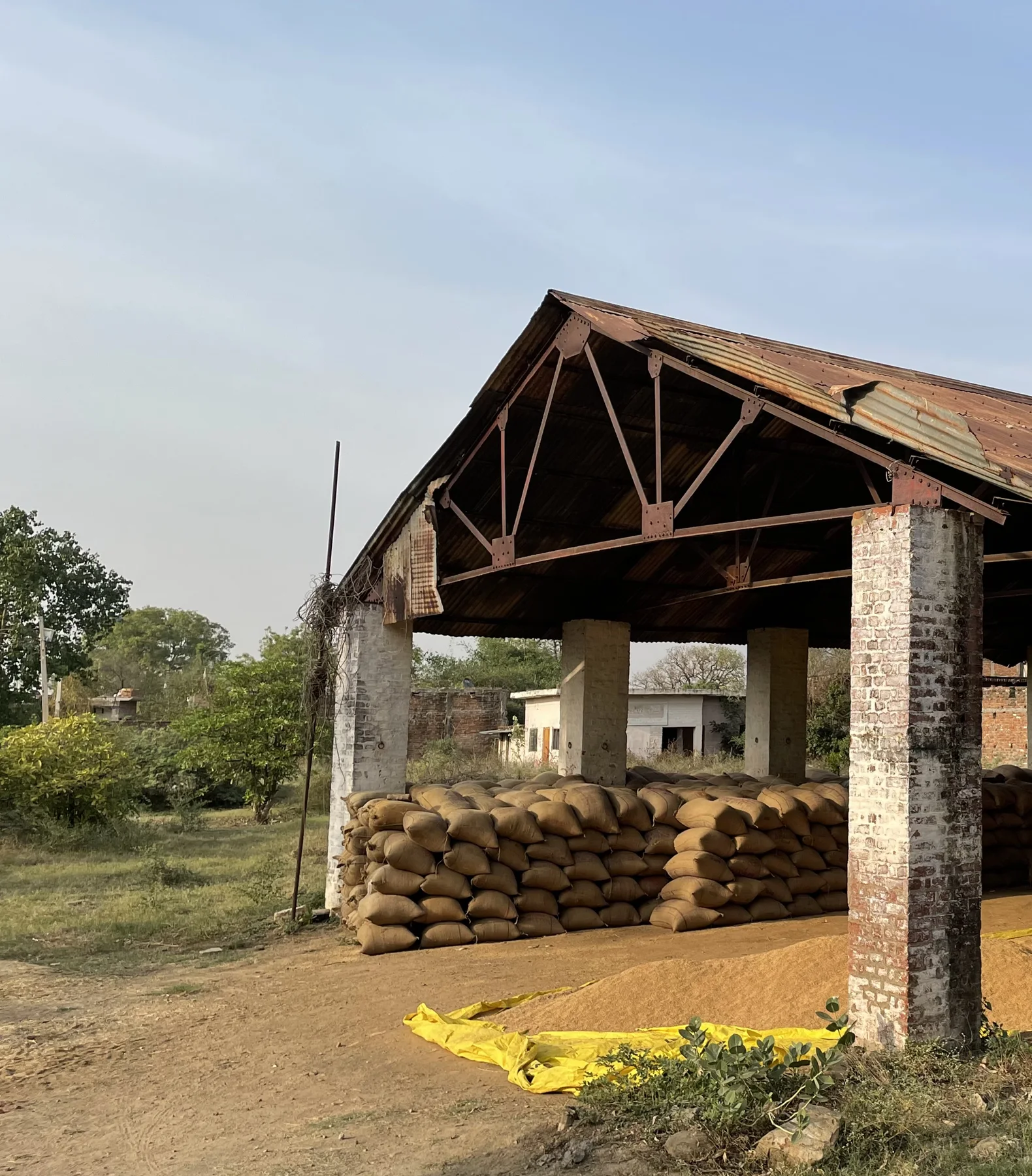
Under cover, the wheat made a broad pile across sheets laid on the ground. The camera moves over ridges of loose grain where the earlier field had been all upright stems and heads. Harvest had changed both the crop’s form and the work around it: there was grain to handle now, beyond the cutting and loading in the field.
We have trolley counts from that harvest, but no measured load weights to turn them into a reliable total. From here, cleaning, drying and storage become their own decisions, explored in our grain-handling guide.
The season ends here with wheat gathered under cover, after the repairs, sowing, water, drainage and hand work that came before it. Those jobs are easy to lose sight of once grain is ready to leave the farm. They are the part of this harvest we want to keep in view.