Journal / FIELD READING
Wheat, and the work that carries it
Before the combine comes the seed drill, the water, the repairs and the weeds. Our Rabi 2025–26 wheat season, from preparing the ground to bringing the grain in.
Farm story · 4 min read Crop & CanopyA life in growing
The winter crop beyond the golden field: sowing work, irrigation, drainage, weeds and a harvest seen in daylight and under working lights.
Triticum spp.
A wheat plant begins with leaves close to the ground. Tillers add shoots; stems extend and heads emerge. After flowering, kernels fill and ripen. A field changes in height, texture and colour through those stages. Our notebook follows the work around those changes, including water supply, drainage, weed work and harvest handling. The Khapli season has its own profile and processing story.
Follow the stages. Their timing changes with the variety, weather and growing conditions.
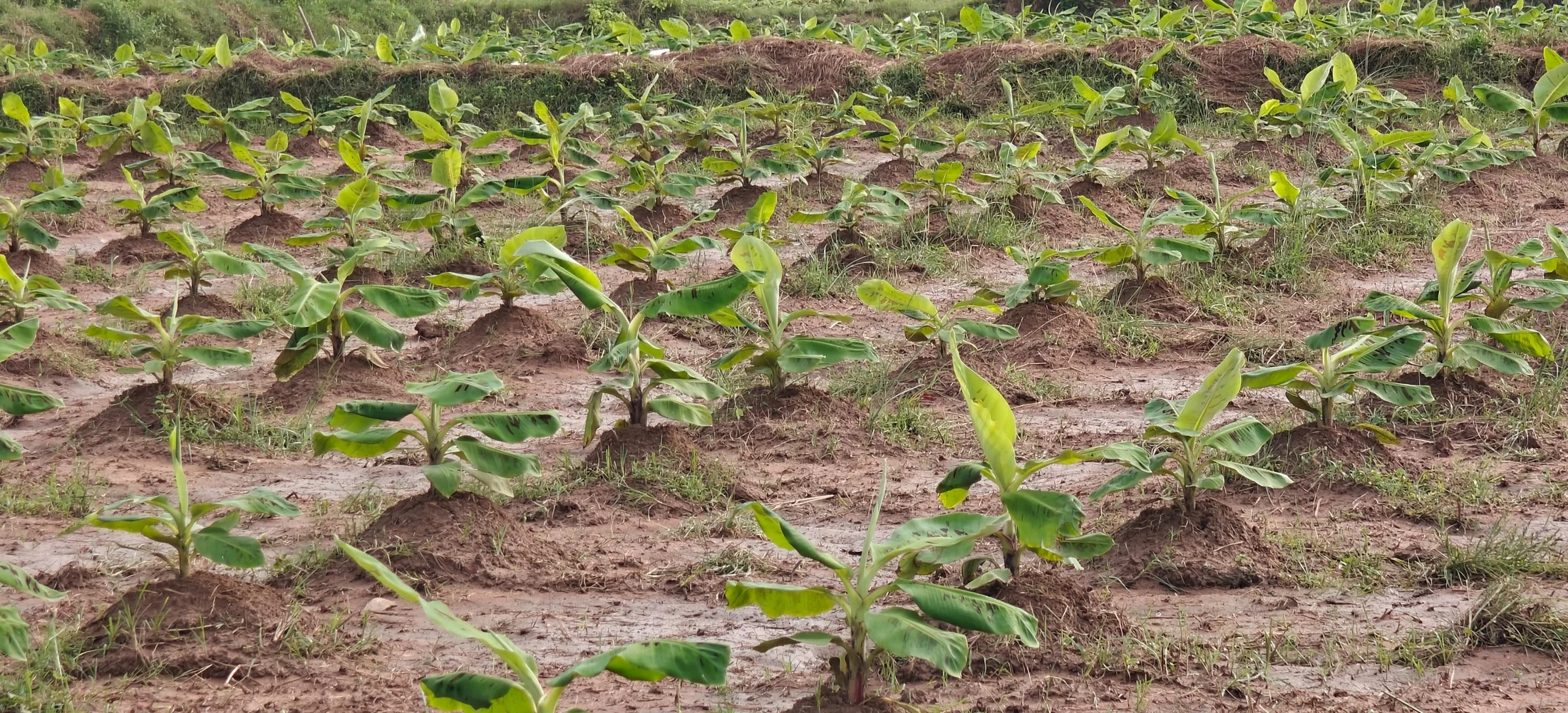
Leaves emerge as the young root system establishes. Look across the stand for gaps, uneven growth and wet patches.
Additional shoots form near the base. Later, stems extend and joints become easier to find.
The head emerges from its enclosing leaf sheath. Flowering precedes the period when kernels gain weight.
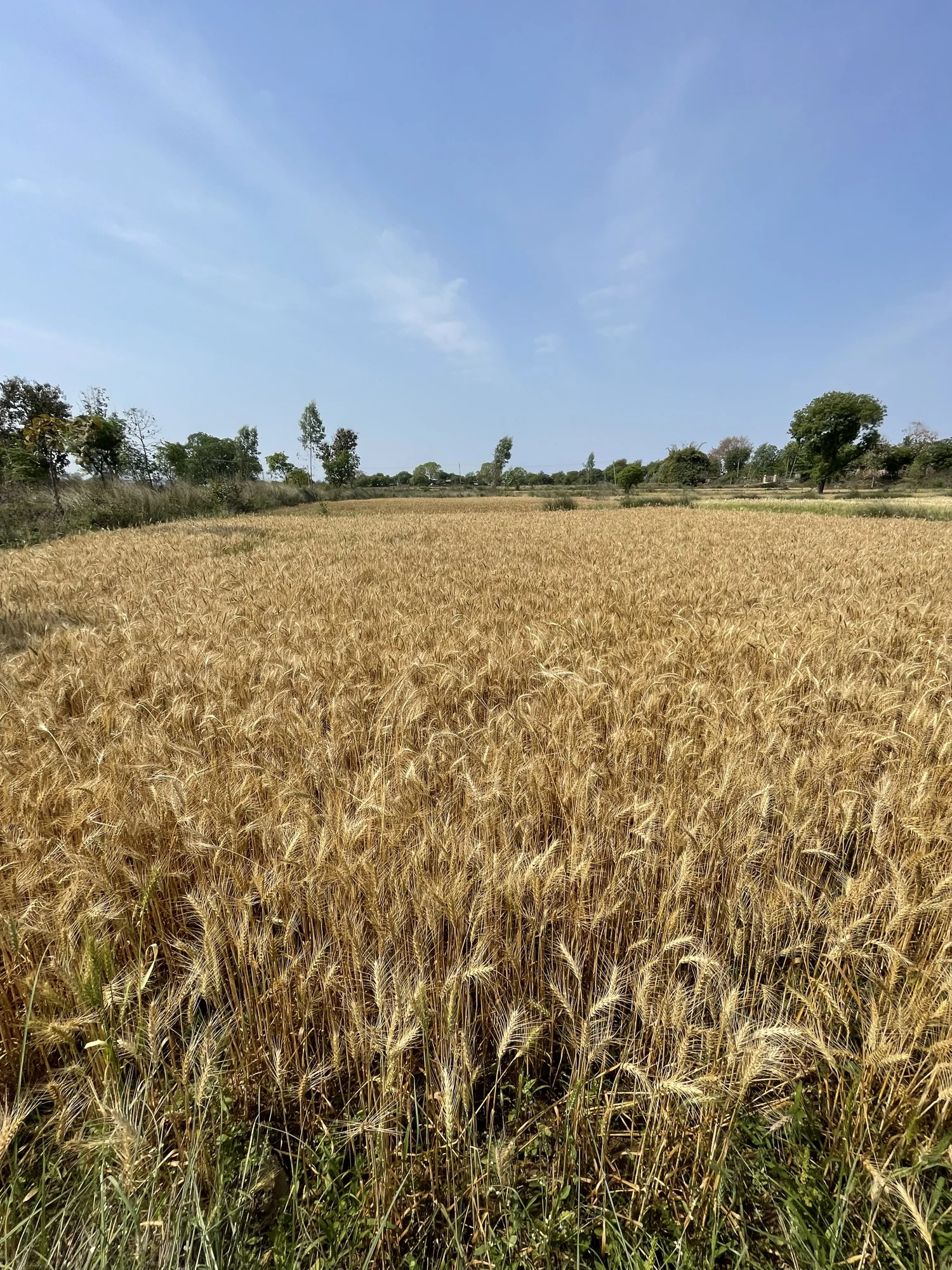
Kernels pass through milk and dough stages before ripening. A golden field still needs a check of grain condition before harvest.
Irrigation decisions need crop stage, soil moisture and weather together. Crown-root initiation and flowering are especially sensitive stages in the TNAU guidance.
The farm records include pipes, fittings, a pump and drainage labour. Record supply work and excess-water problems separately.
Return to the same patch after weed work or a treatment. Note fresh growth, continuing symptoms and any change in soil moisture alongside the date and work done.
The farm accounts trace seed-drill repairs, water supply, drainage and harvest work through Rabi 2025–26. The dates below are account-entry dates. April films show the harvest in daylight and under working lights.
Seed-drill repair and pipe entries appear in the accounts.
The account describes tractor fuel for an alternator-and-motor irrigation setup; surrounding entries include pipe and fittings.
The accounts record labour for draining flooded wheat fields.
The accounts record hand-weeding work shared between wheat and chana.
A wheat harvester payment is recorded after separate daylight and working-light harvest views in the archive.
Follow the season’s work in the dated entries above.
Distinguish a dry root zone from standing water. The same crop may need irrigation in one area and a drainage route in another.
Read the field guide Read the field caseA spray was entered in the accounts under “blight”, though the disease was never identified more precisely. Check fresh symptoms and the field’s recent history before choosing a treatment.
Read the field guide Read the field caseTrolley counts and a grain pile show handling. Weighed grain and a defined area are needed before comparing yields.
Read the field guide Read the field caseAfter harvest come drying, cleaning and storage, each with its own checks and batch weights. The gathered grain then moves towards milling.
Follow the crop into foodBefore the combine comes the seed drill, the water, the repairs and the weeds. Our Rabi 2025–26 wheat season, from preparing the ground to bringing the grain in.
Farm story · 4 min readPumps, rain, drainage and crop stages: why irrigation begins with reading the field.
Growing guide · 2 min readMaturity, moisture and the work after cutting all matter when choosing a harvest window.
Growing guide · 3 min readSources and further reading.