Journal / FIELD READING
Khapli: the season beyond the harvest
Young green leaves, tall wheat heads, a staggered harvest—and the work of turning hulled wheat into food. Our Rabi 2025–26 season, in photographs and films.
Farm story · 3 min read Crop & CanopyA life in growing
Emmer wheat keeps an extra covering after threshing. Releasing the kernel comes before deciding how to mill it.
Meet the growing crop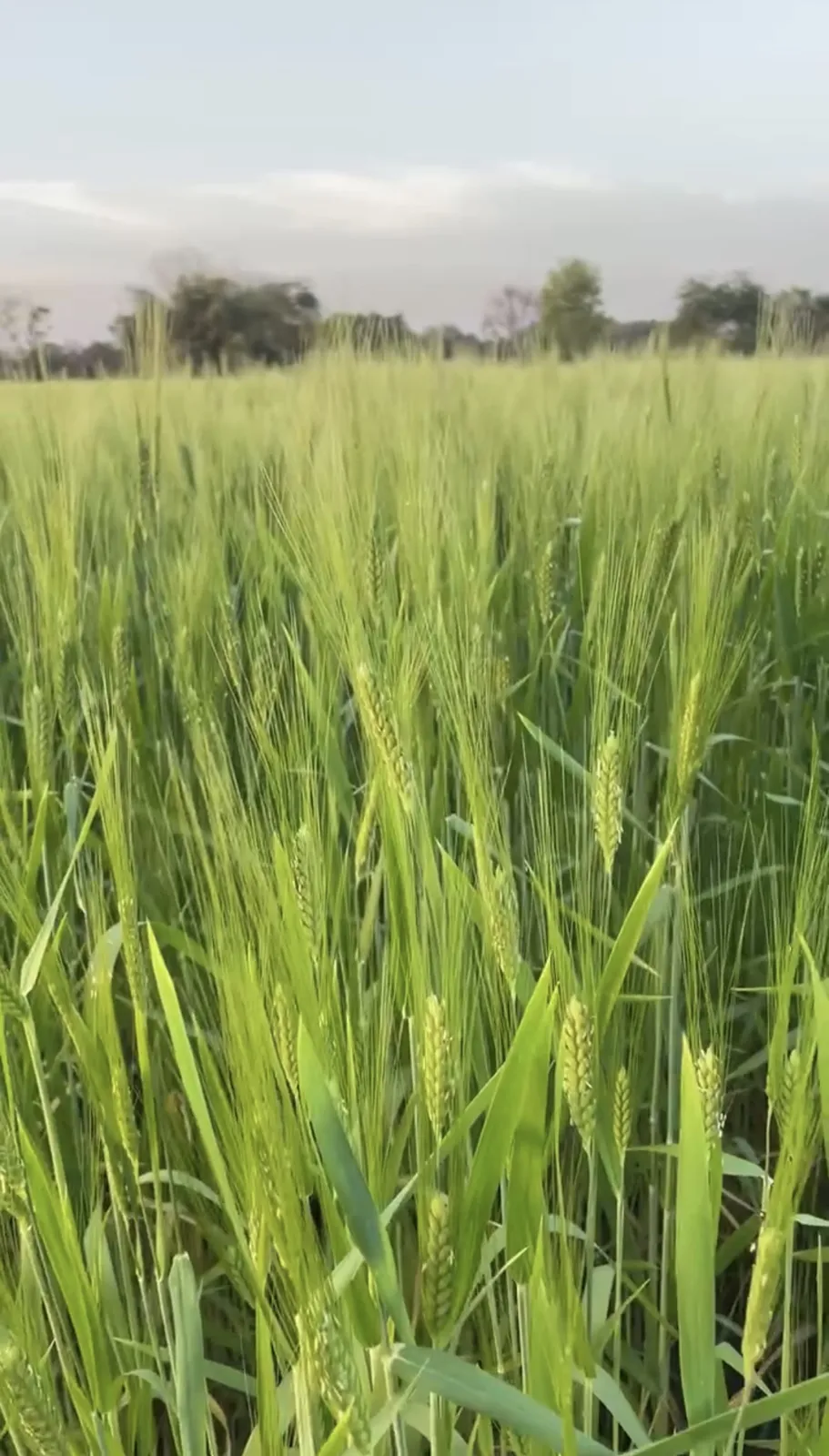
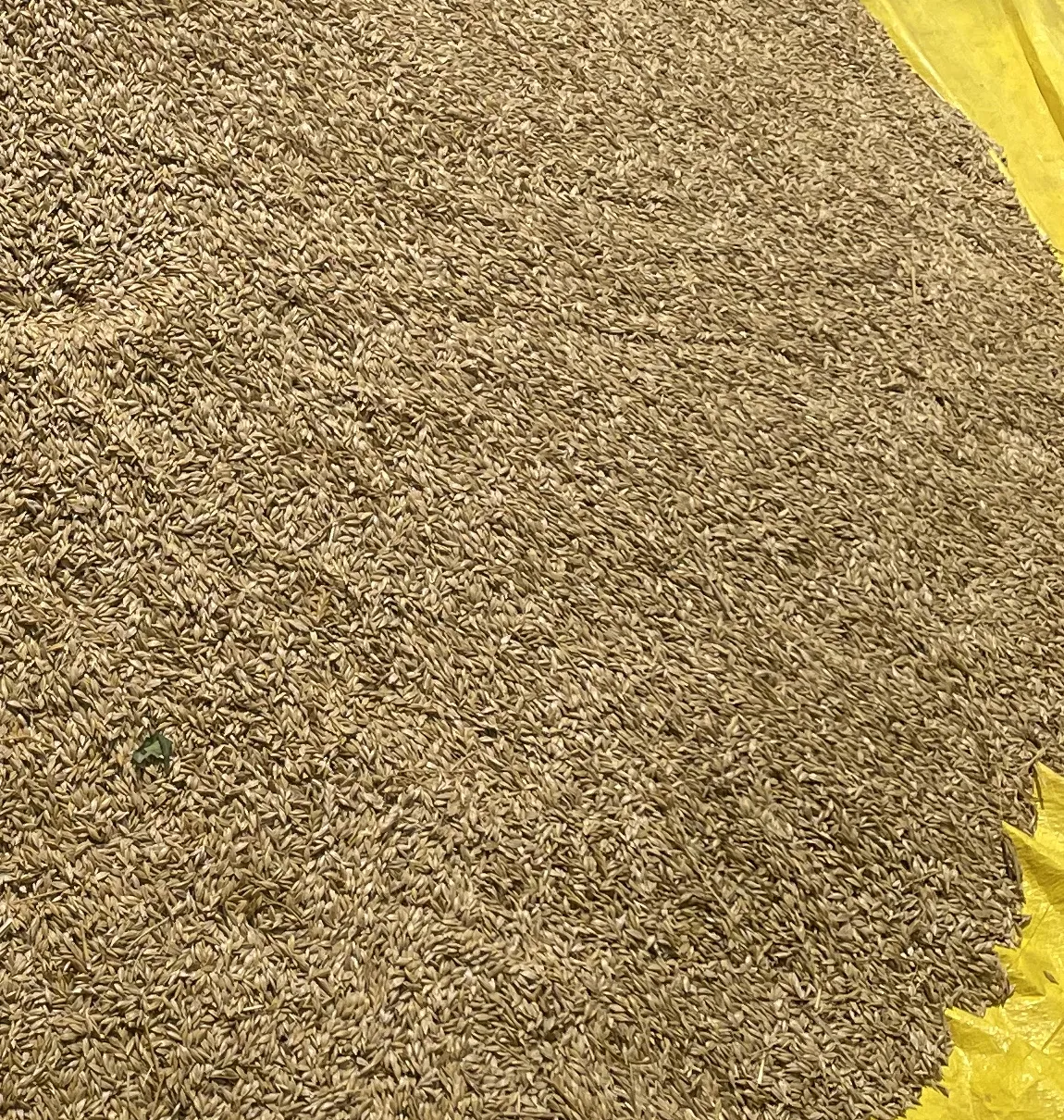
A harvested Khapli grain can still be hidden inside its husk. Khapli is a name used for emmer, one of the hulled wheats, whose covering does not fall away in the same way as free-threshing wheat. That adds a distinct operation before the grain reaches a flour mill. Removing the husk exposes the kernel; grinding the kernel makes flour. The difference becomes tangible when a hulled batch is weighed before and after processing.
Choose a form to see its layers and the work behind it.
Here, “hulled harvest” means Khapli harvested with its husk still attached. Emmer belongs to the hulled wheats, which need an extra release step after threshing. This material includes the outer covering as well as the kernel within.
Dehulling and separation release the kernel from its outer covering. Cleaning then leaves the grain for further use or milling. Removing the hull is not the same operation as removing bran, and does not by itself make refined flour.
Milling changes clean kernels into flour. If bran, germ and endosperm remain in their original proportions, the flour is wholemeal. If fractions are sifted away, its composition changes. The word “Khapli” identifies the wheat, not the degree of sifting.
The sequence depends on the crop and how it will be handled. These are general processing stages.
After the head emerges and flowers, the wheat kernels fill. Their contents move from watery and milky stages through dough stages as dry matter accumulates. Maturity finishes this filling process; later drying removes moisture rather than continuing grain growth.
Cutting removes the standing crop. Threshing separates harvested material from straw, but in a hulled wheat the kernels can remain enclosed in the tight coverings of the spikelets. The first bag is therefore not necessarily grain ready to grind.
Loose straw, dust and other foreign material need separation, and moisture needs to suit the next operation. These preparatory jobs differ from dehulling: a clean-looking lot of hulled wheat can still have its close-fitting coverings around the kernels.
The dehuller loosens or breaks away the coverings surrounding the grain. The released hulls then need separating from the heavier kernels. Pieces that remain unhulled may need another pass, so the material leaving the first pass can be a mixture.
Once the loose coverings and unwanted material are separated, the wheat kernel is visible. It still has bran, germ and endosperm. The bran belongs to the edible kernel; it is different from the hull removed around it.
Grinding reduces the clean kernels to flour. Wholemeal retains bran, germ and endosperm in their original proportions; sifting can remove some fractions. The amount of clean grain returned by a dehuller is therefore a different result from the flour returned after milling.
A 54 kg batch of hulled Khapli produced 32.5 kg of clean grain. Dividing the clean-grain weight by the hulled input gives approximately 60.2% recovery for this particular batch.
This paired measurement describes the June batch. It does not establish recovery for the whole 510 kg harvest, a flour yield, or the individual weights of hulls, other material and processing losses.
The word can be ambiguous in everyday use. In this farm account, “hulled Khapli” means the harvested wheat still enclosed in its husk. Ask explicitly whether a bag contains husk-covered material or clean, dehulled kernels.
No. Dehulling removes the outer covering around the kernel. Bran remains on the clean kernel until a later milling or sifting operation removes it. Grinding clean kernels with their edible parts retained can produce wholemeal flour.
No. Khapli is wheat and contains gluten. Dehulling and ordinary flour milling do not make it gluten-free. Its name and age do not change that distinction when choosing ingredients.
Young green leaves, tall wheat heads, a staggered harvest—and the work of turning hulled wheat into food. Our Rabi 2025–26 season, in photographs and films.
Farm story · 3 min readDehulling, cleaning and flour milling are different stages—and their weights answer different questions.
Growing guide · 3 min readWhy clean grain, measured drying and regular checks belong together after harvest.
Growing guide · 3 min readIllustrations explain the processing stages in general. Photographs come from our farm archive; they do not represent each illustrated food form or the weighed batch.