
Khapli: the season beyond the harvest
Young green leaves, tall wheat heads, a staggered harvest—and the work of turning hulled wheat into food. Our Rabi 2025–26 season, in photographs and films.
A SEASON IN SIX CHAPTERS
Young leaves, tall heads, cut stalks and cleaned grain: a closer look at one Khapli season on our farm.
The field begins in green
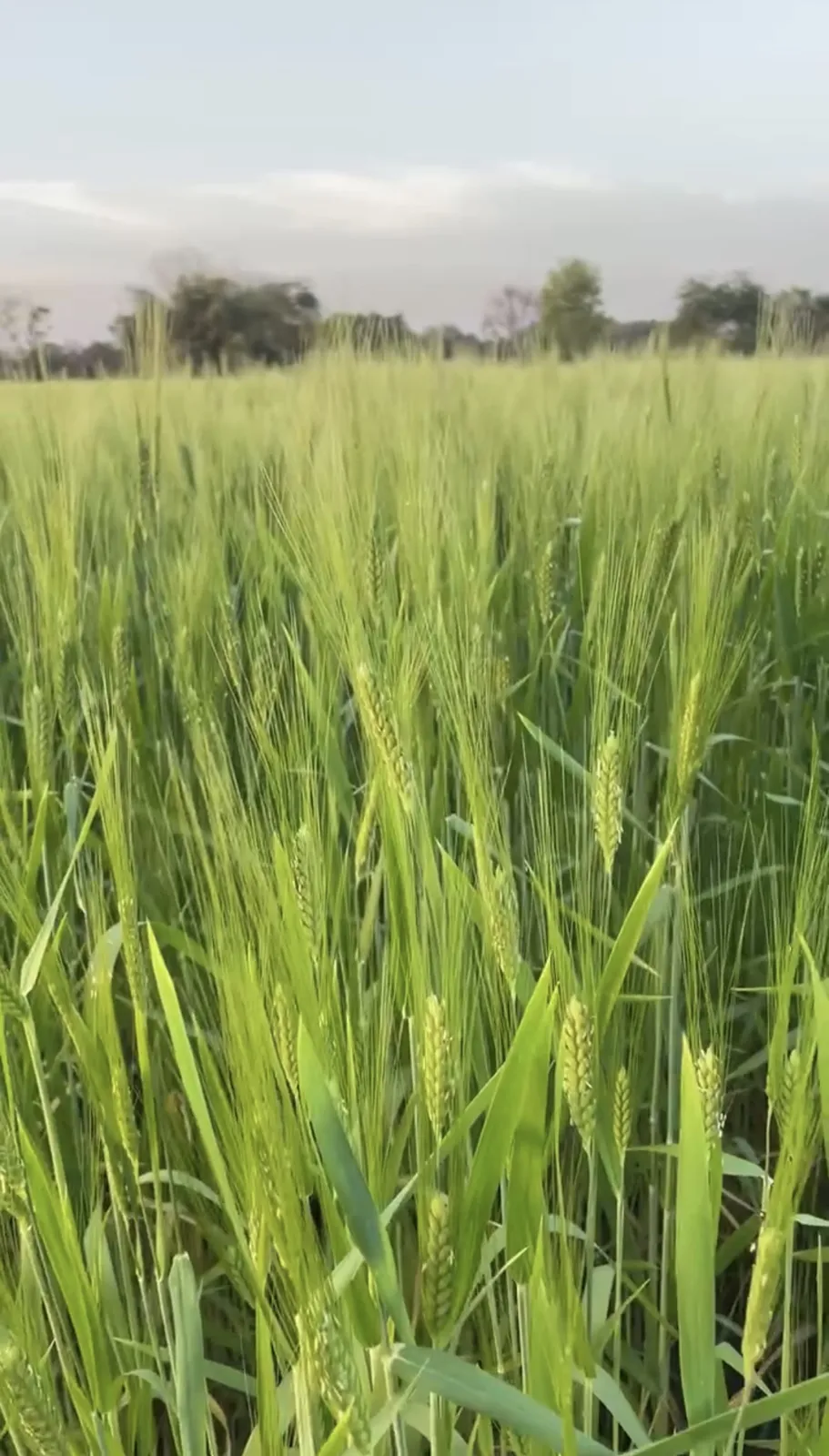
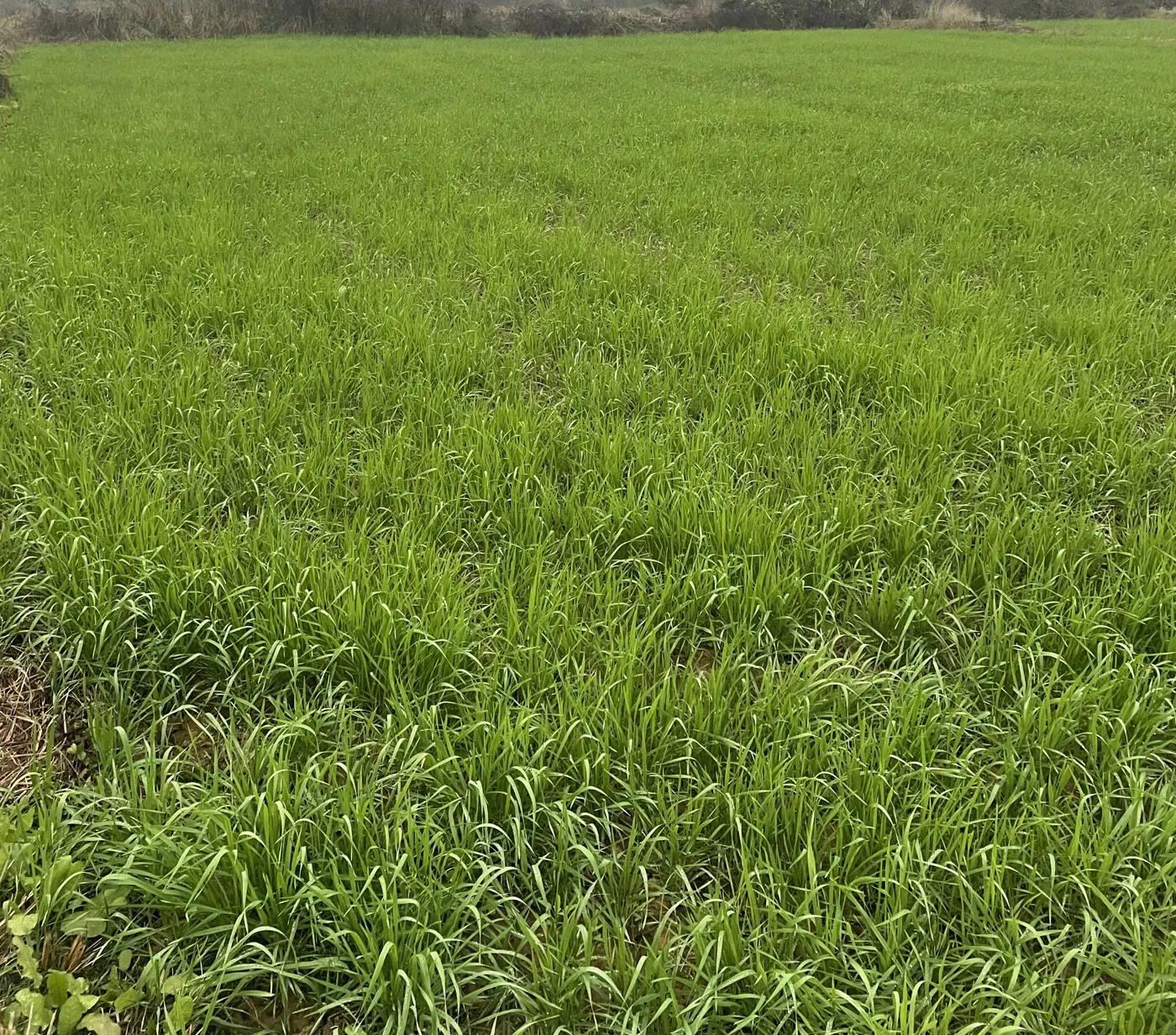
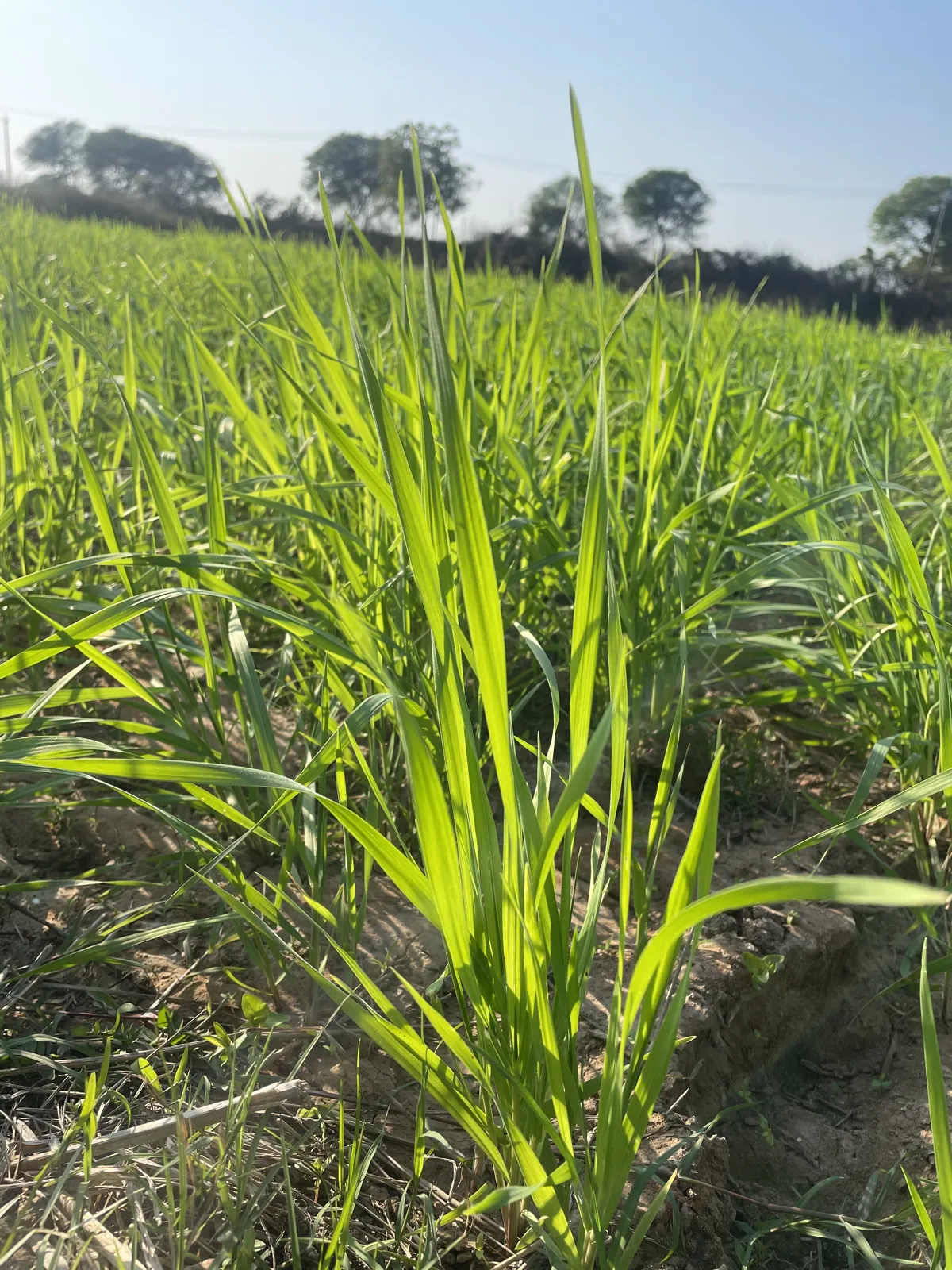
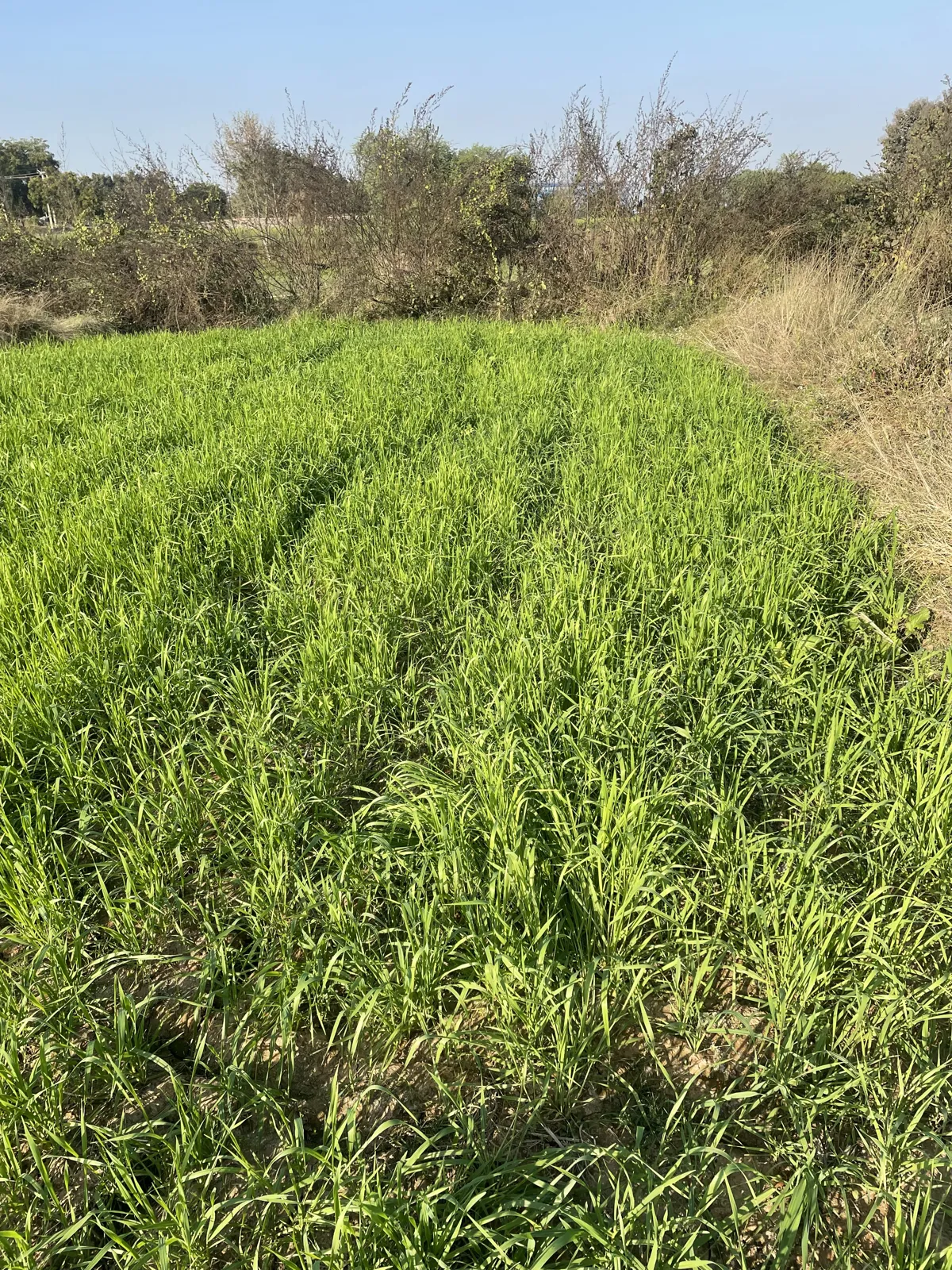
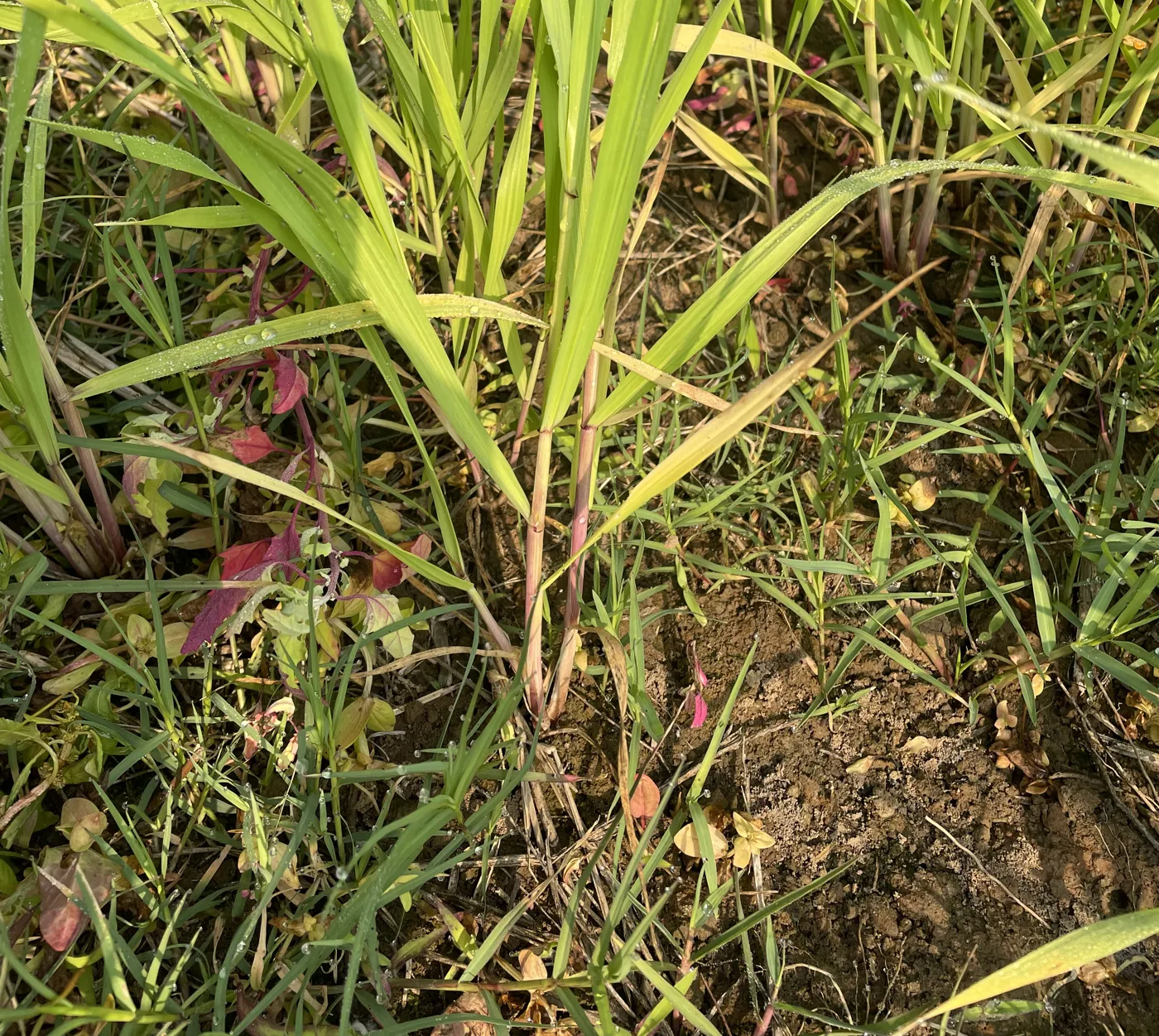
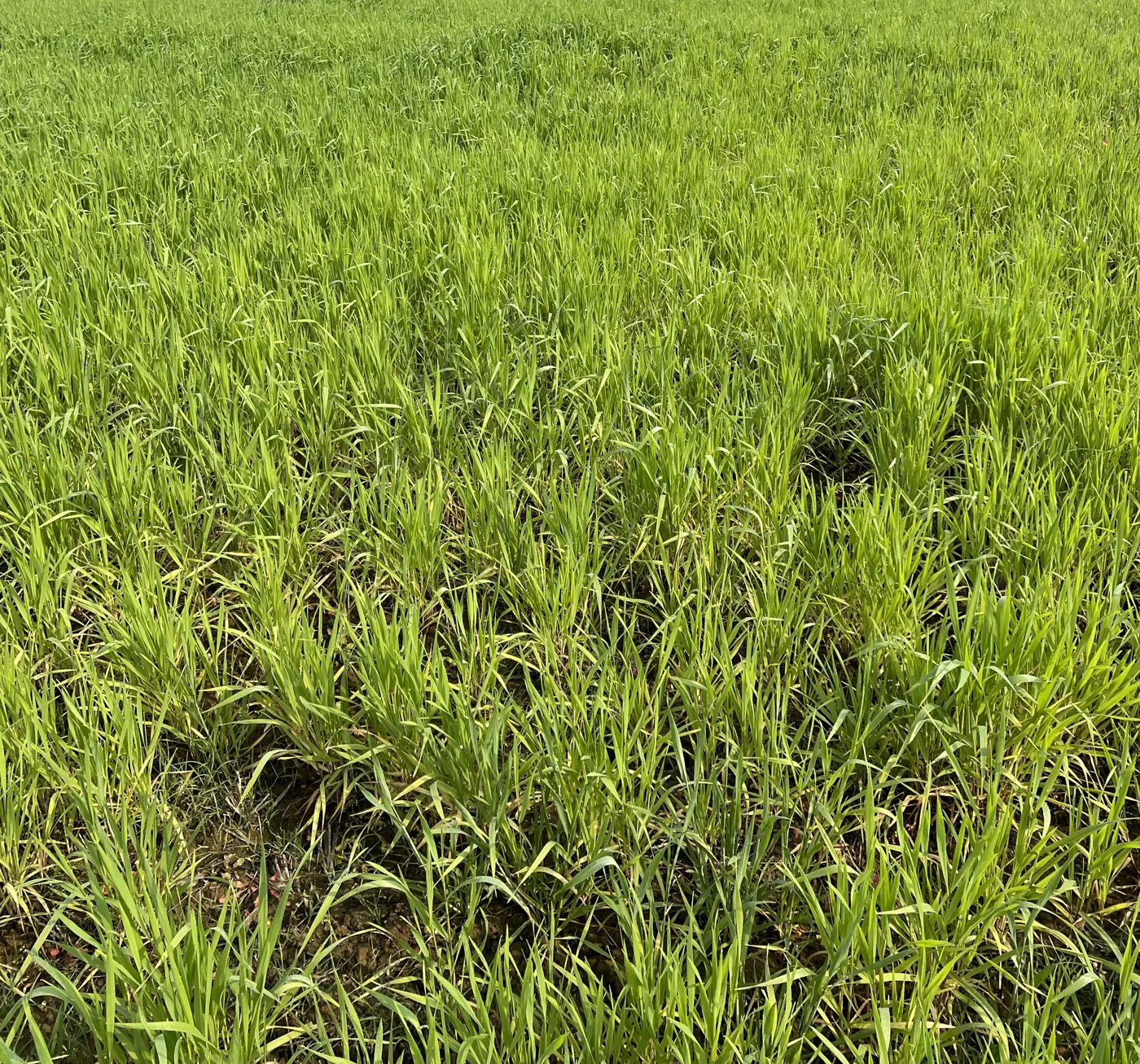
In the earliest views, the crop is still close to the ground: narrow leaves, open soil between plants and a field gradually filling with green. Later photographs bring us down among the stems. The same crop that looks like a smooth surface from a distance becomes a tangle of individual plants up close.
This was our Khapli wheat during the Rabi 2025–26 season. It occupied a smaller part of the farm than our other wheat. Its story would continue well beyond cutting: the harvested grain would still need releasing from its husk.
A field worth slowing down for
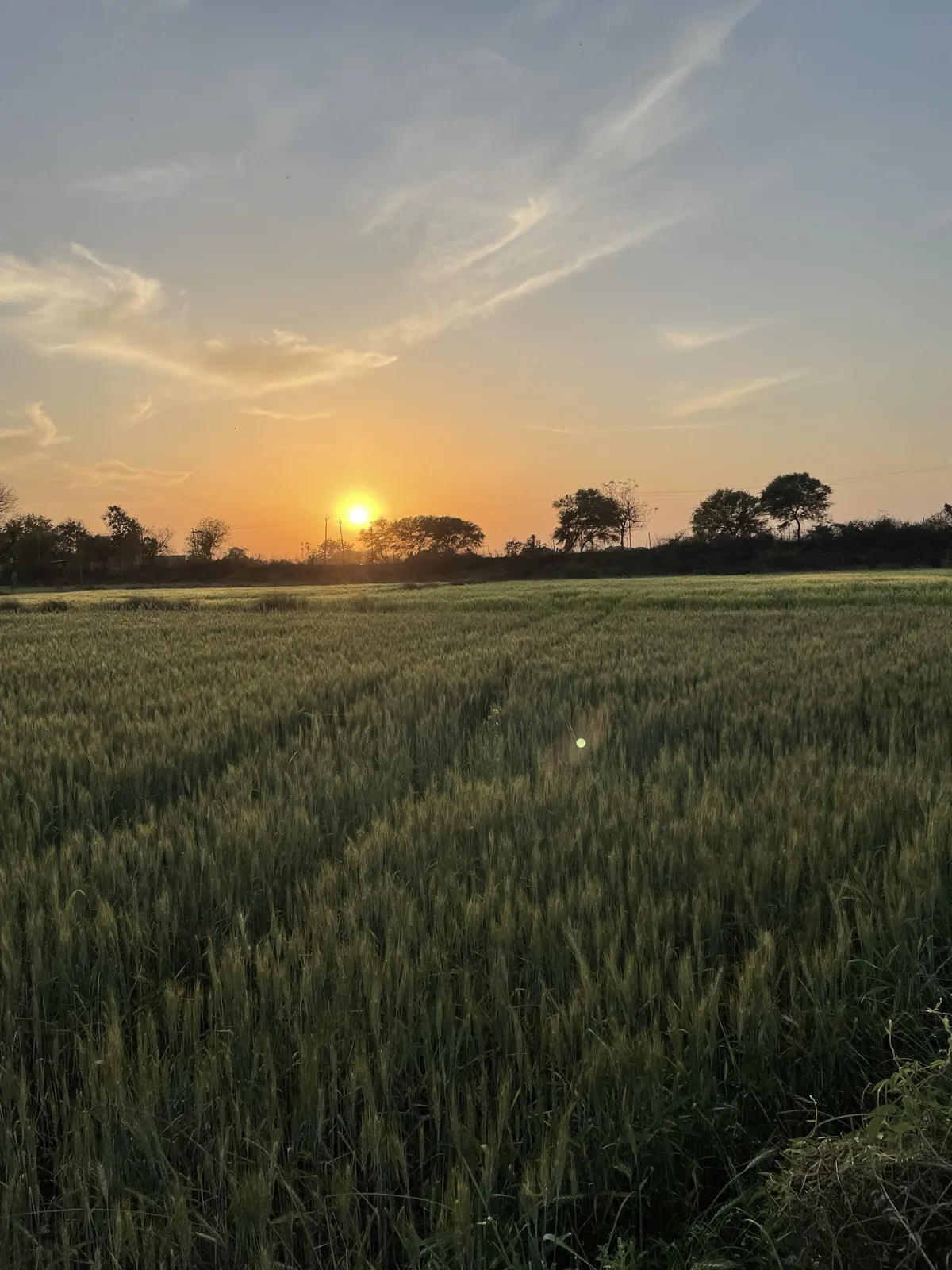
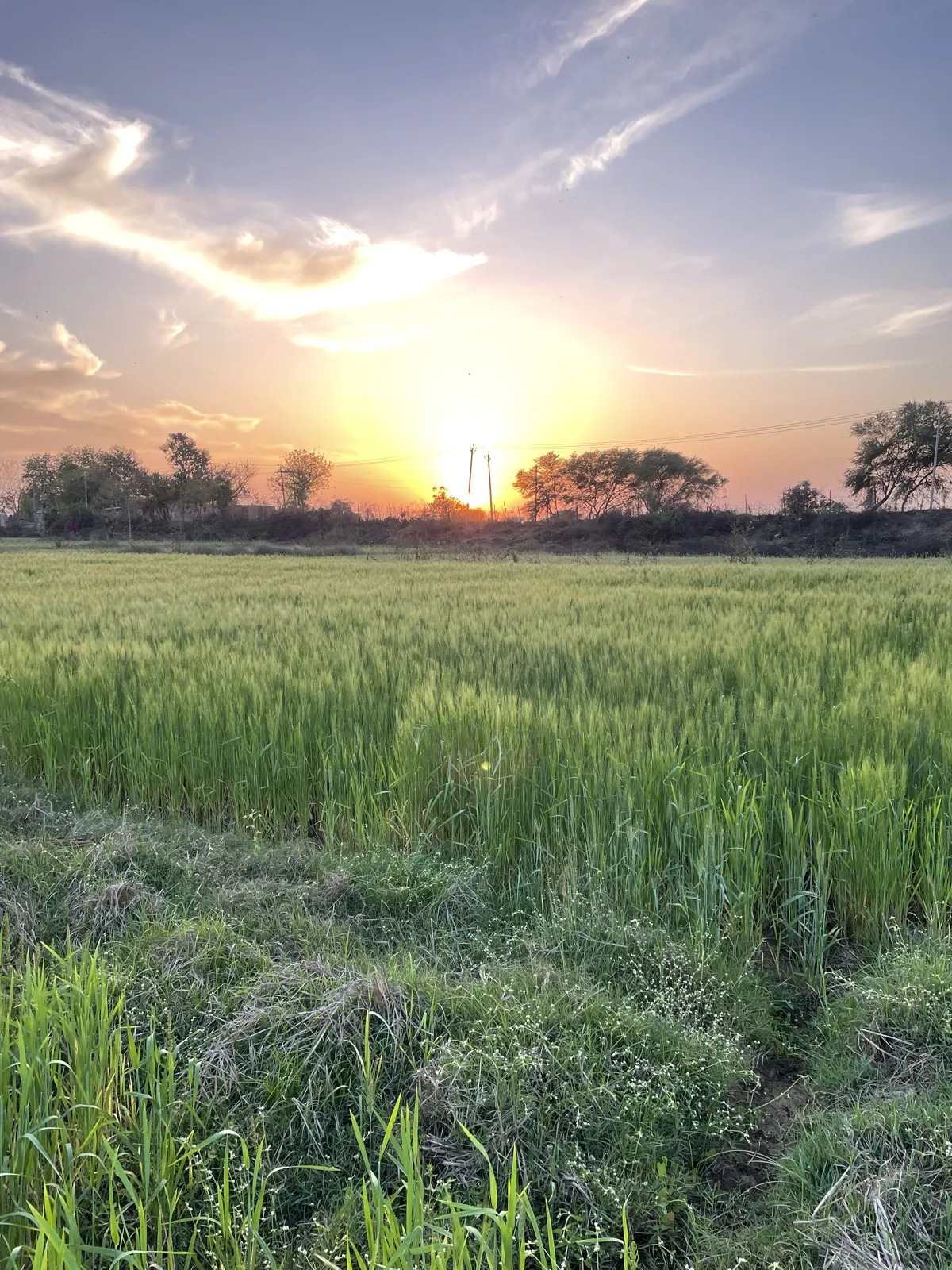
By February, the crop had been irrigated and was moving through its reproductive stages. Long stems and emerging heads were beginning to give the field a different outline.
Some of the most memorable views need little explanation: light through a young leaf, rows seen from ground level, the whole field changing colour as the sun lowers. They are part of the season too, alongside the work recorded in the notebook.

When the stems gave way
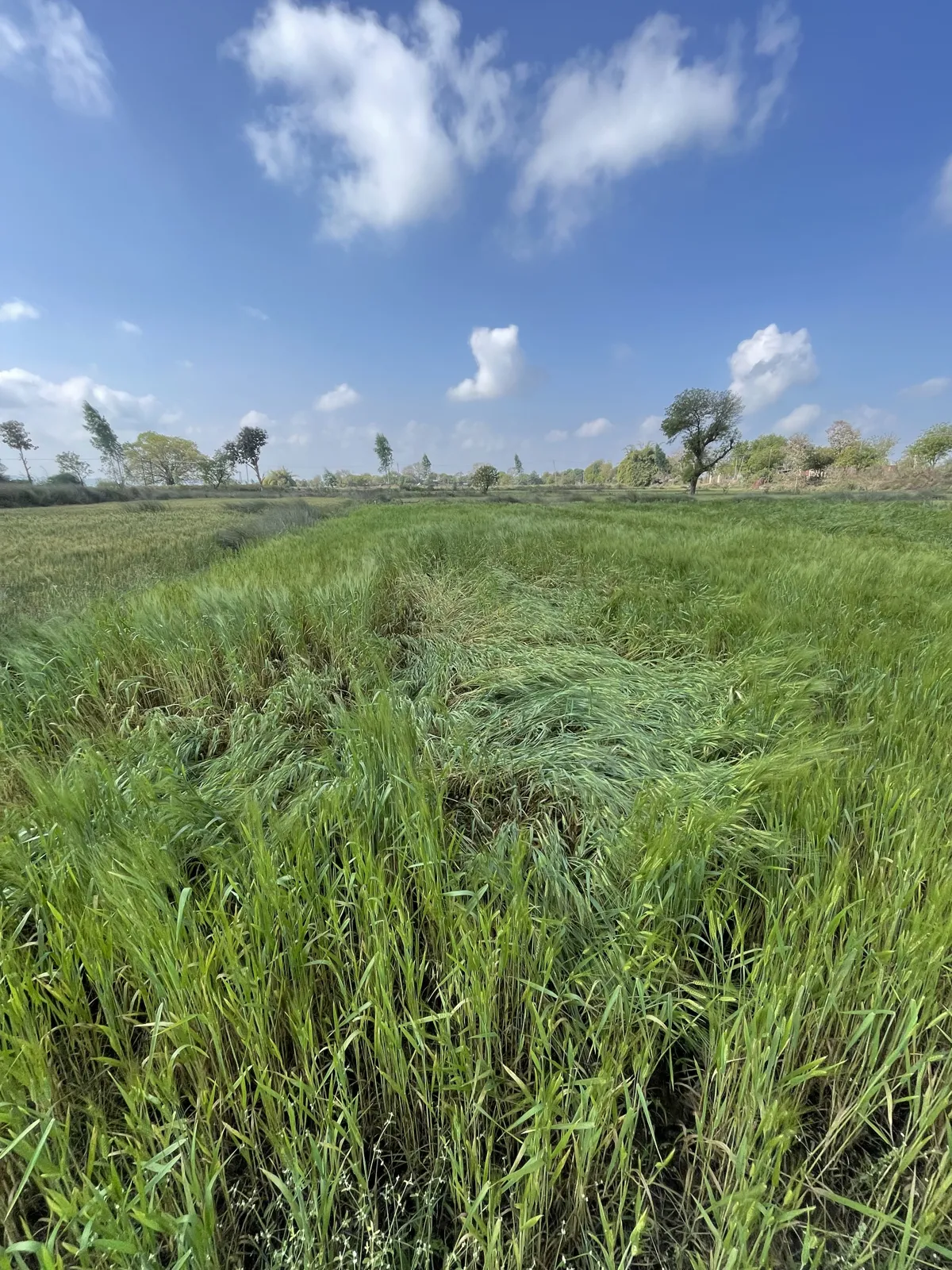
The taller crop did not stay upright everywhere. By 20 March, we estimated that about 10% of the Khapli had lodged—bent or fallen over.
Flattened swathes lay among plants still standing, changing the pattern of the field. We had been watching the wind and unsettled weather, though we could not put the lodging down to a single cause.
Most of the crop remained standing. Attention turned towards maturity and deciding when to begin cutting.

A harvest taken in stages
We chose to cut the Khapli by hand and keep it separate from the other wheat. By 9 April, roughly 70% had been cut. The grain felt hard when examined, but we wondered whether some of the cutting had been a little early.
The cut stalks were left to dry further rather than being threshed immediately. The rest of the crop stayed standing for several more days.
By then, part of the harvest lay drying while part was still standing. Cutting and threshing had become separate decisions, with the condition of the grain still in question.
The grain was still inside its husk
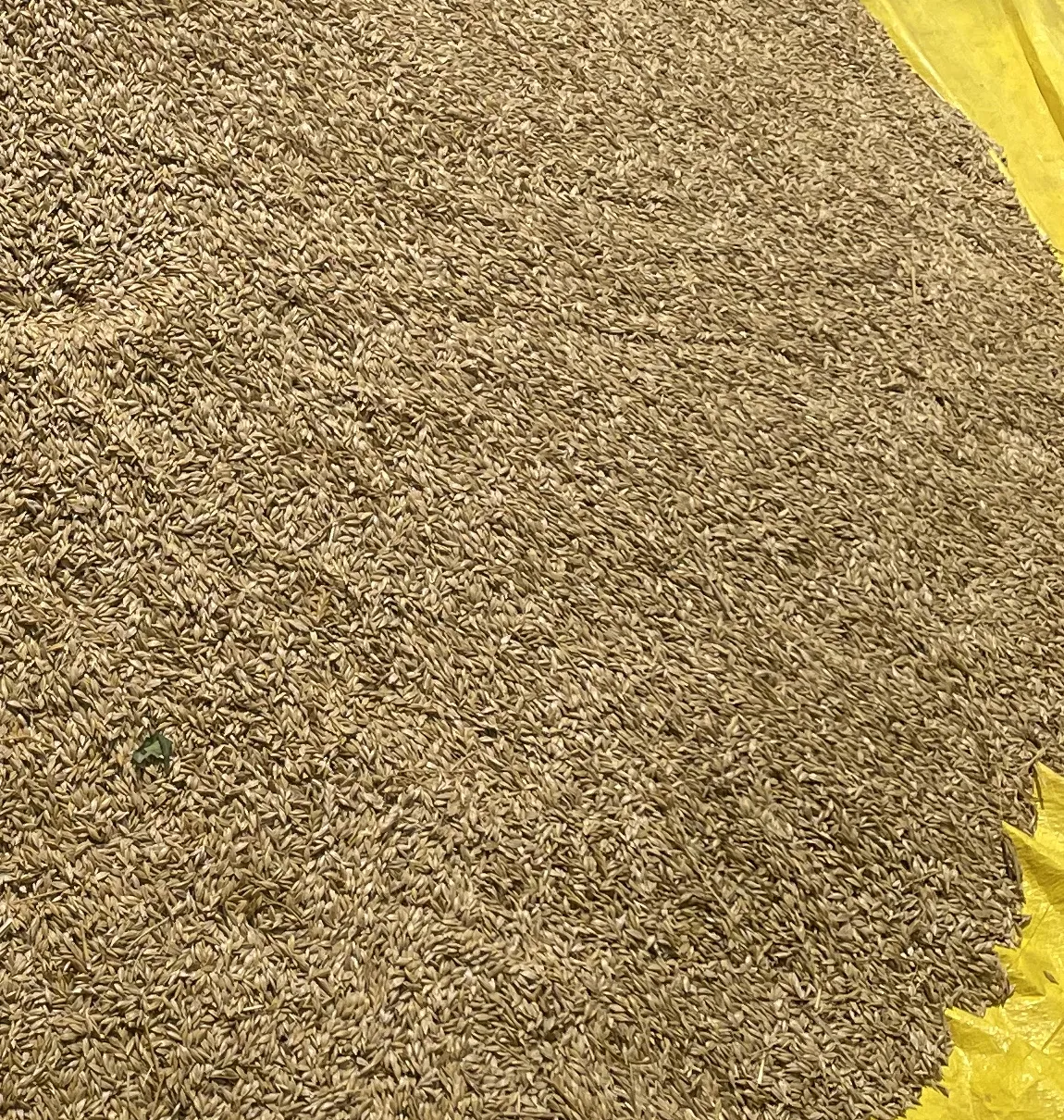
By 18 April, the harvest total was in: 510 kg of hulled Khapli. The grain was still enclosed in its husk, with another stage of work ahead before it could reach the kitchen.
The distinction became clearer when we processed a batch in June. On 10 June, 54 kg of hulled wheat yielded 32.5 kg of cleaned grain: a recovery of about 60.2% for that batch.
Those paired weights gave us a measure of the cleaned grain returned from that batch. They do not establish recovery for the whole 510 kg harvest, or separate the weight of husks, other material removed and any processing losses.
The season continued beyond the field
Some of the harvest was kept for household use and future planting. The work had moved from tending a crop to handling and processing what it had produced.
What stays with us is the length of that journey. The young green field, the heads moving in the light, the patches that fell, the cut stalks left to dry—and then the extra task of releasing the grain from its husk.
The next season has specific questions to carry forward: how any lodged patches develop, when each part is ready for cutting, and what a dehusking batch returns. The field and the processing work belong in the same decision about how much Khapli to grow.
About this story
Adapted from the owner-supplied Khapli Rabi 2025–26 narrative. About 10% lodging estimated by 20 March; about 70% cut by 9 April; hulled harvest 510 kg recorded 18 April; 54 kg dehusking batch yielded 32.5 kg cleaned grain on 10 June. Individual image capture dates are not assigned to these events.
From the farm’s dated working notes.