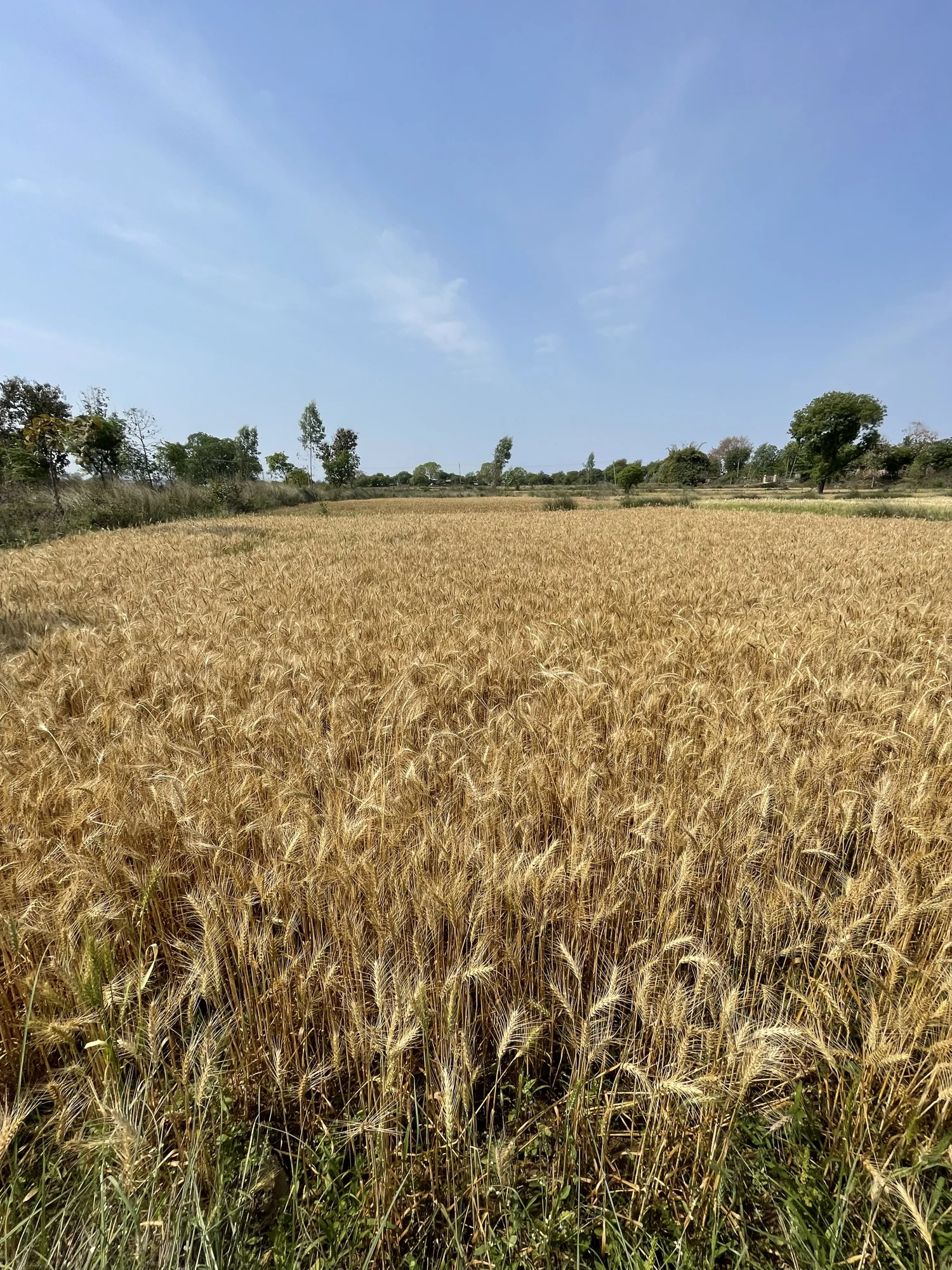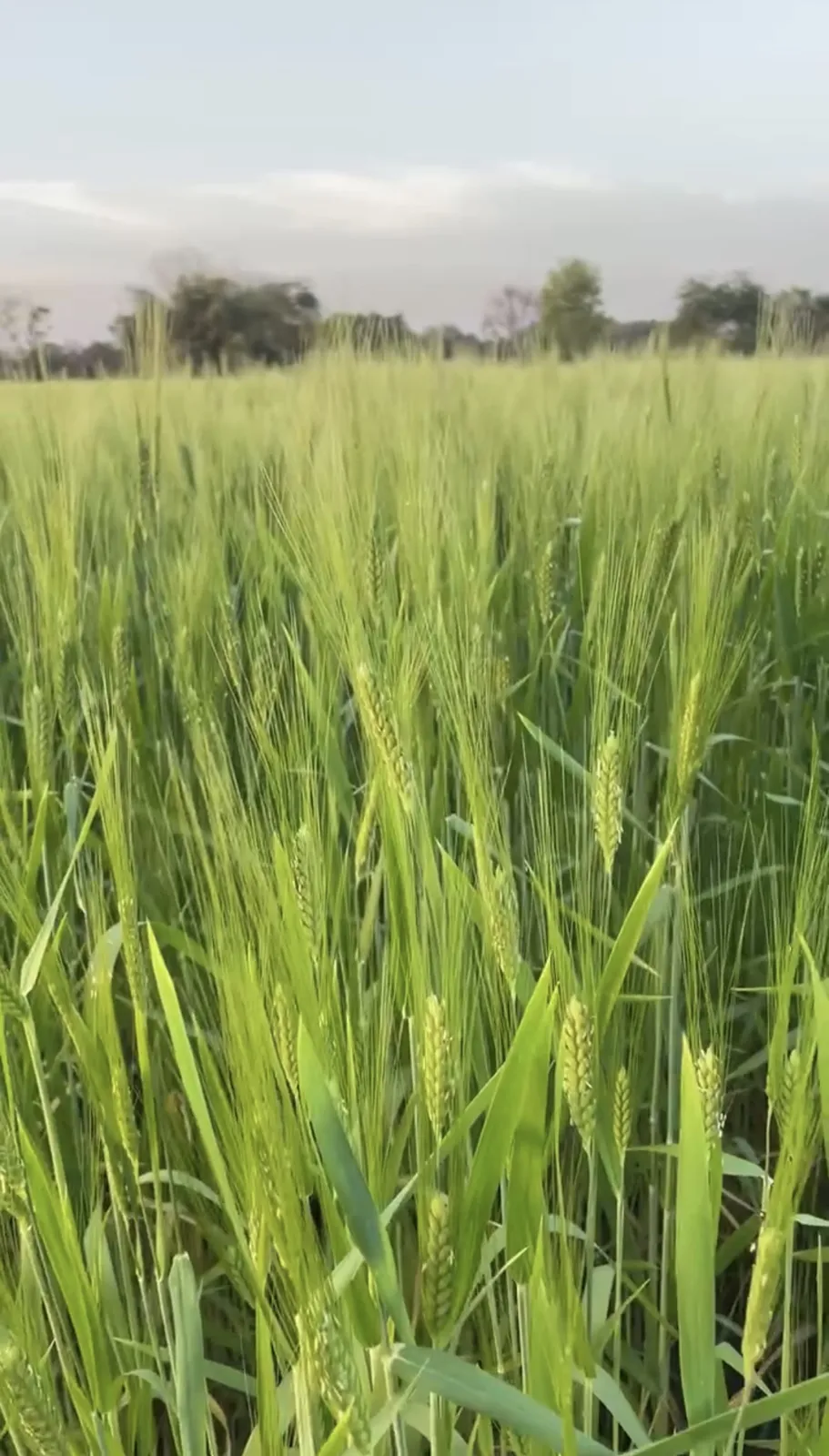
Where the Khapli lay down
About a tenth of the Khapli was reported lodged. Hand cutting and further drying followed later in the season; the cause and yield loss remain unresolved.
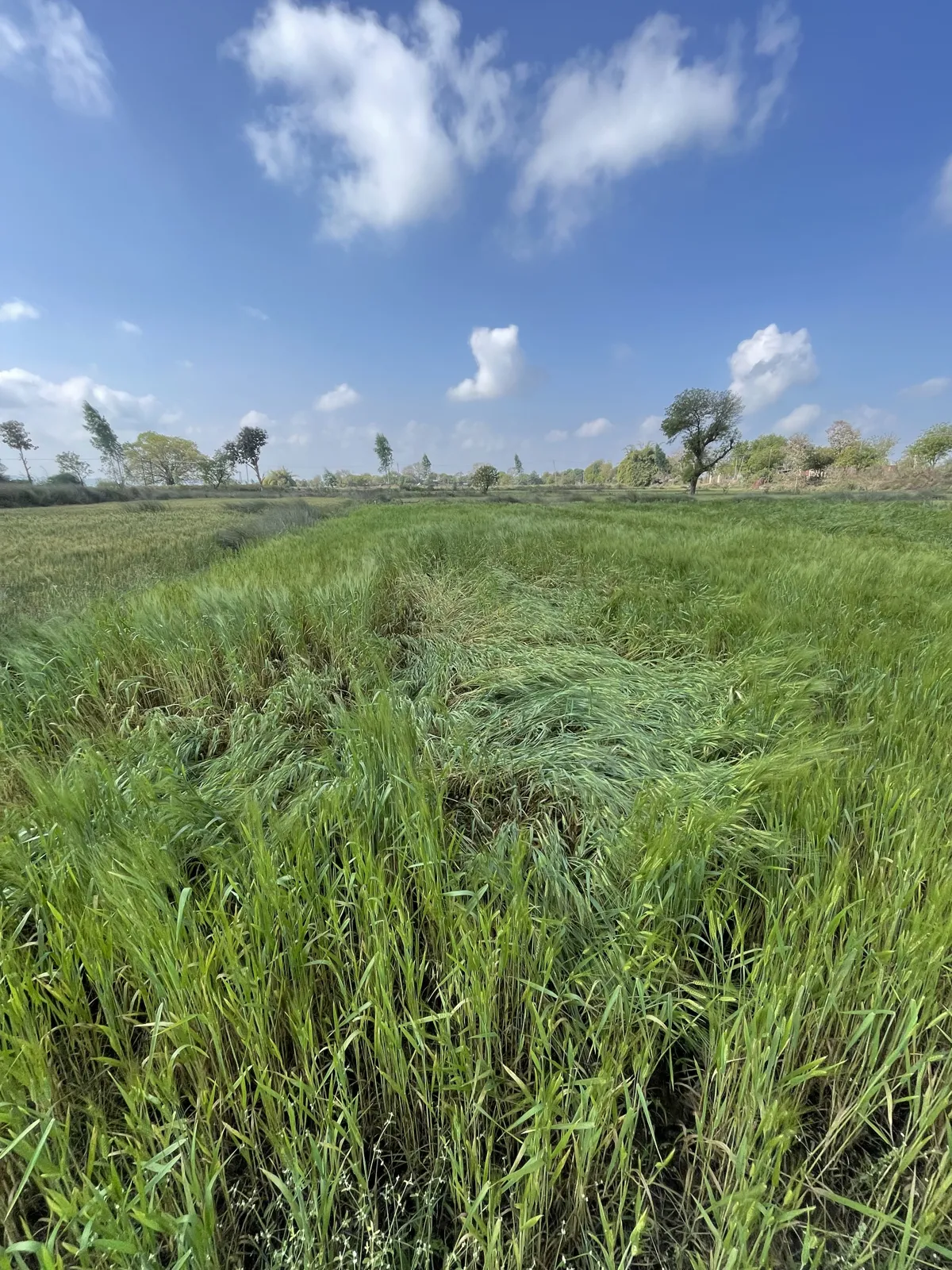
What we saw
The owner estimated about 10% lodged by 20 March 2026. Undated photographs show flattened swathes among upright wheat.
What was recorded
Hand cutting, additional drying and a later total of 510 kg of hulled material on 18 April.
What remains unknown
The lodging mechanism, a confirmed cause, and any measured yield loss attributable to the fallen area.
In this field case
Some of the field is still upright. Through it runs a swathe of wheat lying low, its stems bent across one another. It is a striking change in the canopy, and the kind of sight that invites a quick explanation.
By 20 March 2026, the owner estimated that about 10% of the Khapli crop had lodged. The undated photographs show fallen patches beside standing wheat. The estimate comes from the field account, rather than the area visible in either frame.
A flattened crop is the beginning of the question
Lodging describes a crop that can no longer remain upright. To understand a patch, we would look at where stems bend or fail, how roots sit in the soil and how the affected area lies across the field. Those details were not established here.

Cornell’s small-grain guidance identifies stand density, fertility and excessive nitrogen among lodging risks. These are questions to consider, not a diagnosis of this field. Nutrition, wind, irrigation, disease and cultivar weakness were not confirmed as its cause. [1]
The harvest had its own decisions
The crop was later cut by hand, with Khapli kept separate from other wheat. By 9 April, roughly 70% had been cut. Some grain felt hard, but the owner questioned whether part had been cut early. Cut stalks were left to dry further while the remaining crop stood for several more days.
Crop stage still mattered after the canopy had changed. These harvest choices were not recorded as a rescue treatment for lodging.
Ten per cent lodged does not mean ten per cent lost
On 18 April, the recorded harvest total was 510 kg in hulled form. There was no separate yield measurement for lodged and upright areas, so that total cannot reveal the loss attributable to the fallen patch.
About 10% describes the estimated lodged area. The 510 kg describes the hulled harvest; it is neither a flour yield nor a per-area productivity figure.
What the next notebook could add
Closer stem-and-root views, crop stage, weather observations and separate measurements from affected and upright areas would help explain a future case. This season leaves us with a visible field change and a sequence of harvest choices. Its cause remains an open question.
The work, in sequence.
A lodged area estimated
About 10% was the owner’s field estimate, not a measured grain-loss percentage.
Cutting advanced in stages
Roughly 70% was cut; stalks dried further and some wheat remained standing.
Hulled harvest recorded
510 kg was the recorded total, without a separate lodged-area yield.
Dates belong to the farm entries. The photographs are undated archive views, presented without a before-and-after claim.
About this story
This field case draws on the owner’s farm notes and original photographs. Dates refer to farm entries; individual image capture dates are unverified. Linked research explains general principles. No measured treatment result is established.
From the farm’s dated working notes.Sources & further reading
- Cornell CALS · Fertilisers for small grains Accessed 2026-10-24