The work between the rows
Hand weeding, rogueing and herbicides: different ways of responding to a growing weed problem.
In this guide
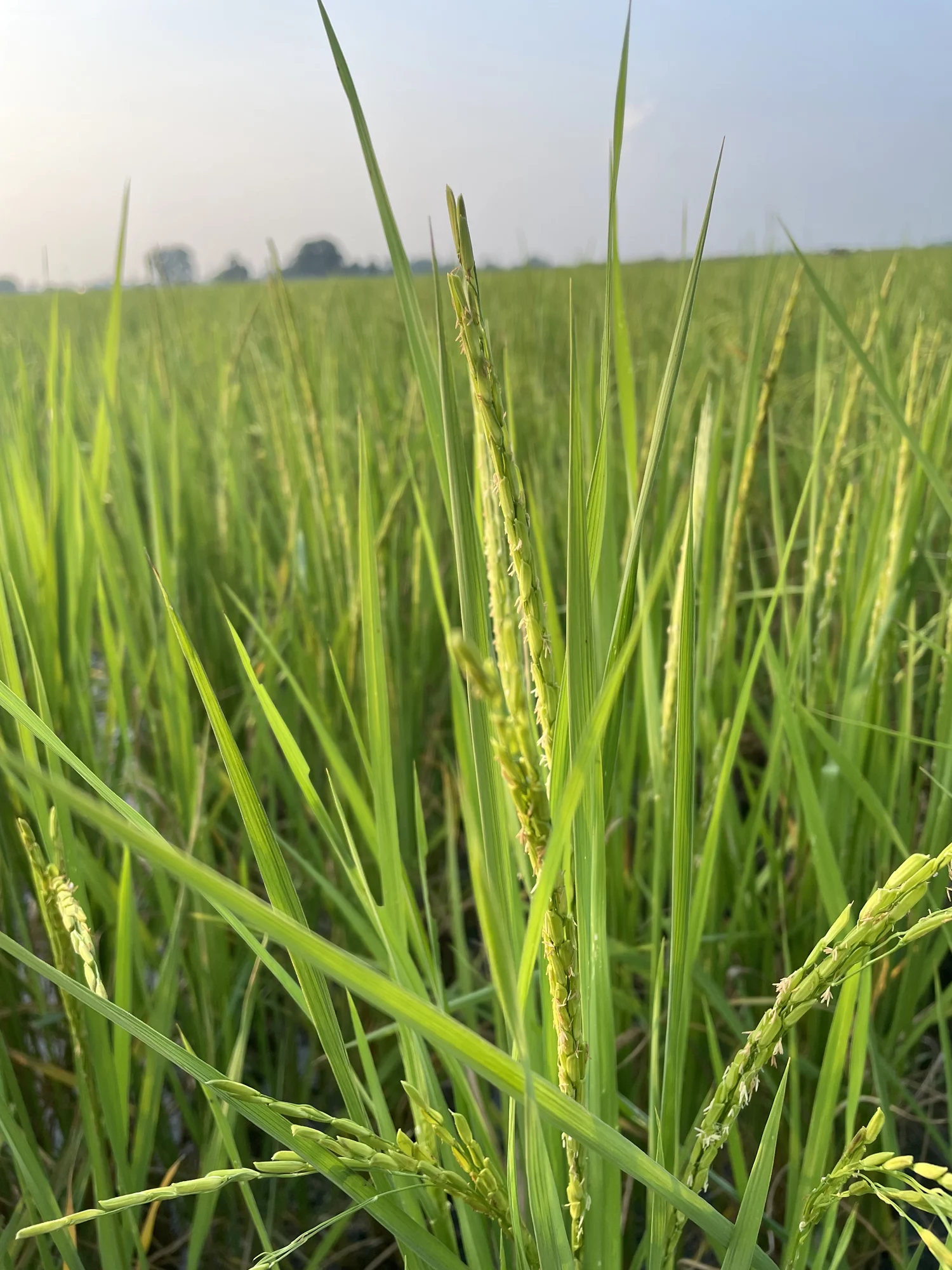
A cleared banana planting needed weeding again. In rice, some unwanted plants were still too short to distinguish easily above the crop. Our monsoon notes show why weed work follows the plants themselves: what is growing, where it is growing and whether it can yet be separated from the crop.
First, know what is there
A grass, a sedge, a broadleaf weed and an unwanted rice plant are not the same problem. Species, weed size, crop stage and the way the crop was established all affect the options. The IRRI Rice Knowledge Bank describes weed control as a combination of prevention, field preparation, water management, hand work, machinery and correctly selected herbicides. [1]
Pre-emergence and post-emergence describe the application timing in relation to weed emergence. They are not interchangeable windows, and the exact product label sets its use. [1]
When the unwanted plant resembles the crop
Our logs call some unwanted paddy “Jhanga”, or wild or volunteer rice. The notes do not establish a botanical identity for every patch, so we keep the local term without treating it as a confirmed species.
The farm chose manual removal. Vishnu Bhog was reported cleared on 9 October. Work in 1718 began later and the owner confirmed its completion on 20 October. The two entries describe different crops and separate rounds of work.
Earlier in October, one patch was left to become easier to distinguish above the crop canopy. That was a recorded field decision, rather than a general rule to let weeds grow taller. Preventing unwanted plants from contributing more seed remains an important part of the wider weed-management problem. [1]
Around the banana plants
August brought targeted herbicide work in heavier weed patches alongside manual clearing around plants. The archive names a glufosinate-based treatment and records yellowing weeds. That is a historical observation, not proof of full control or a product recommendation.
By 26 August, the first manual weeding cycle was recorded as complete. September brought more weeding. A finished round did not mean the ground would remain clear for the rest of the season.
A herbicide needs a precise job
Selectivity means a product can affect some plants differently from others under its labelled conditions. It does not mean a spray is harmless to every crop nearby. Check the exact crop, weed, formulation, timing and water instructions before use; a product chosen for one setting cannot be assumed suitable for another. [1]
Keep herbicide equipment separate from other spraying equipment, as the Meghalaya agriculture department advises. Follow the label, avoid drift onto neighbouring crops and keep spray away from water sources. A historic tank mixture is not evidence of compatibility. [2]
What to notice next time
The plants left behind can explain the limits of a finished round. Were they missed, did they survive, or did a new flush emerge after rain or soil disturbance? Their identity and location help distinguish those possibilities.
Hand clearing, machine work and herbicide use each leave a different history. Knowing which weeds returned after which operation gives the next round a more precise job.
About this story
Examples come from the August–October 2026 farm archive, supplemented by the owner’s 20 October completion report for 1718. Jhanga is retained as the log’s local description, not a verified species identification.
From the farm’s dated working notes.Sources & further reading
- IRRI Rice Knowledge Bank, Odisha · Weed management Accessed 2026-10-23
- Department of Agriculture, Meghalaya · Pesticide handling Accessed 2026-10-23