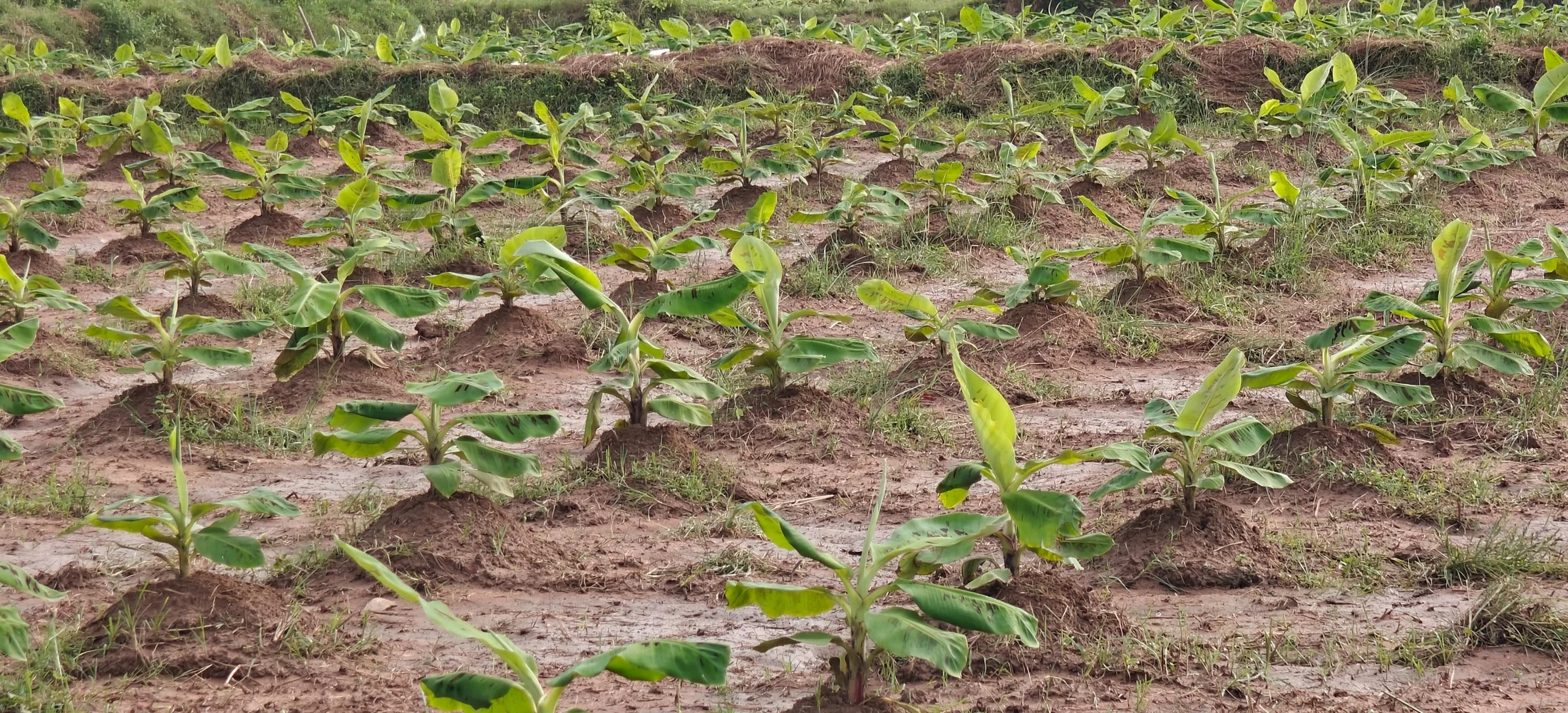
Banana: learning to look closer
Young plants, uneven growth and an infestation that brought us closer to the leaves. A photo story from a plantation still finding its way.
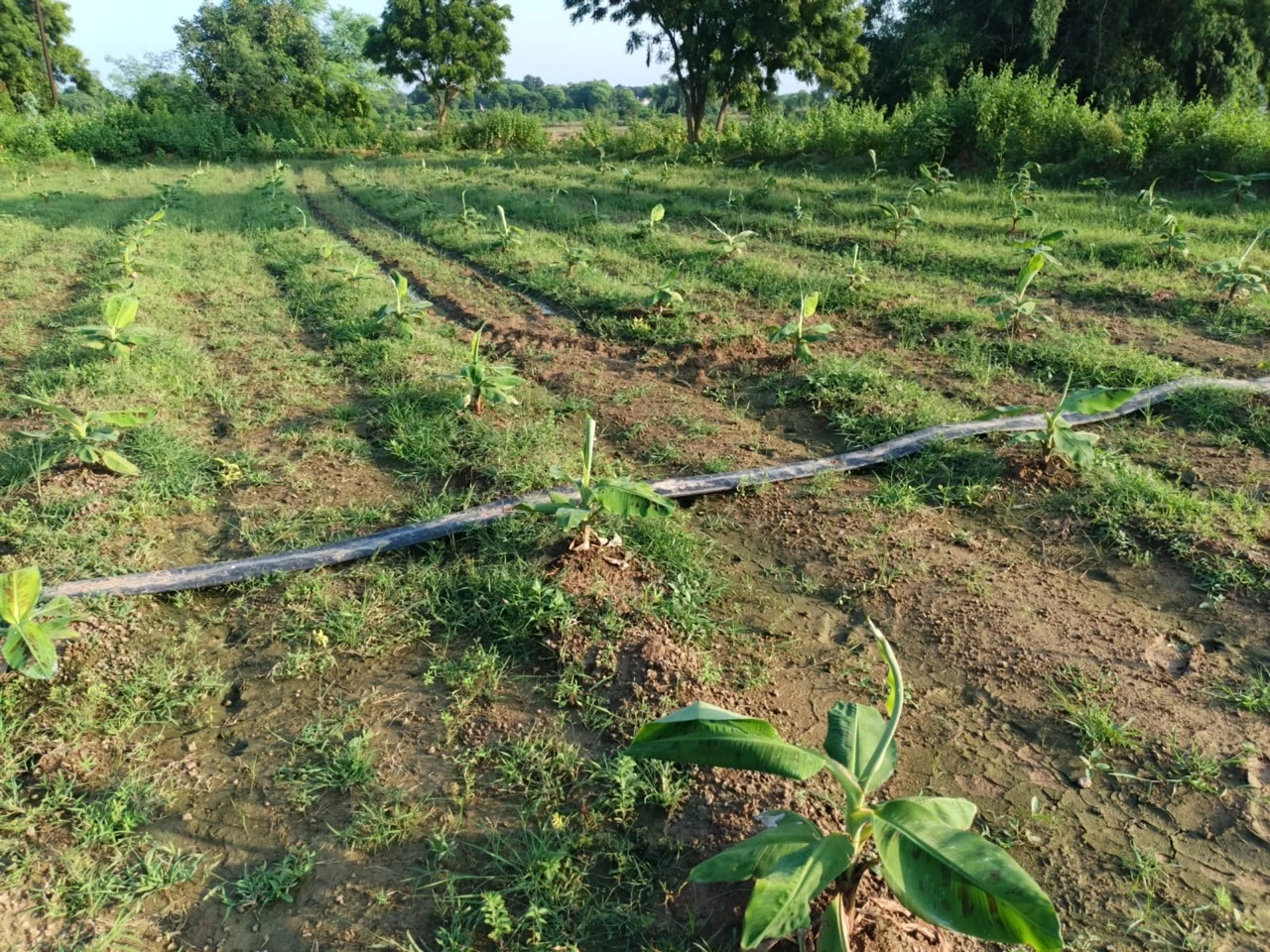
From the edge of the field, the banana planting looks orderly: rows of small plants, a pipe crossing the ground, trees beyond. Step closer and that single view breaks into many smaller stories. One plant is opening a broad leaf. Another is still short. A caterpillar sits beside a midrib. At the base of a larger plant, a small shoot is pushing up.
These views stay with establishment, before a bunch becomes the subject of the photograph. The small plants, their newest leaves and the ground around them carry the story.
First, a field of small plants
The farm notes place the main planting between 11 and 17 July 2026, after land preparation and levelling. Tissue-culture plants went into the field in stages. Irrigation and the first foliar-feeding round were recorded complete by 20 July, with a few washed-out or failed plants still needing replacement.
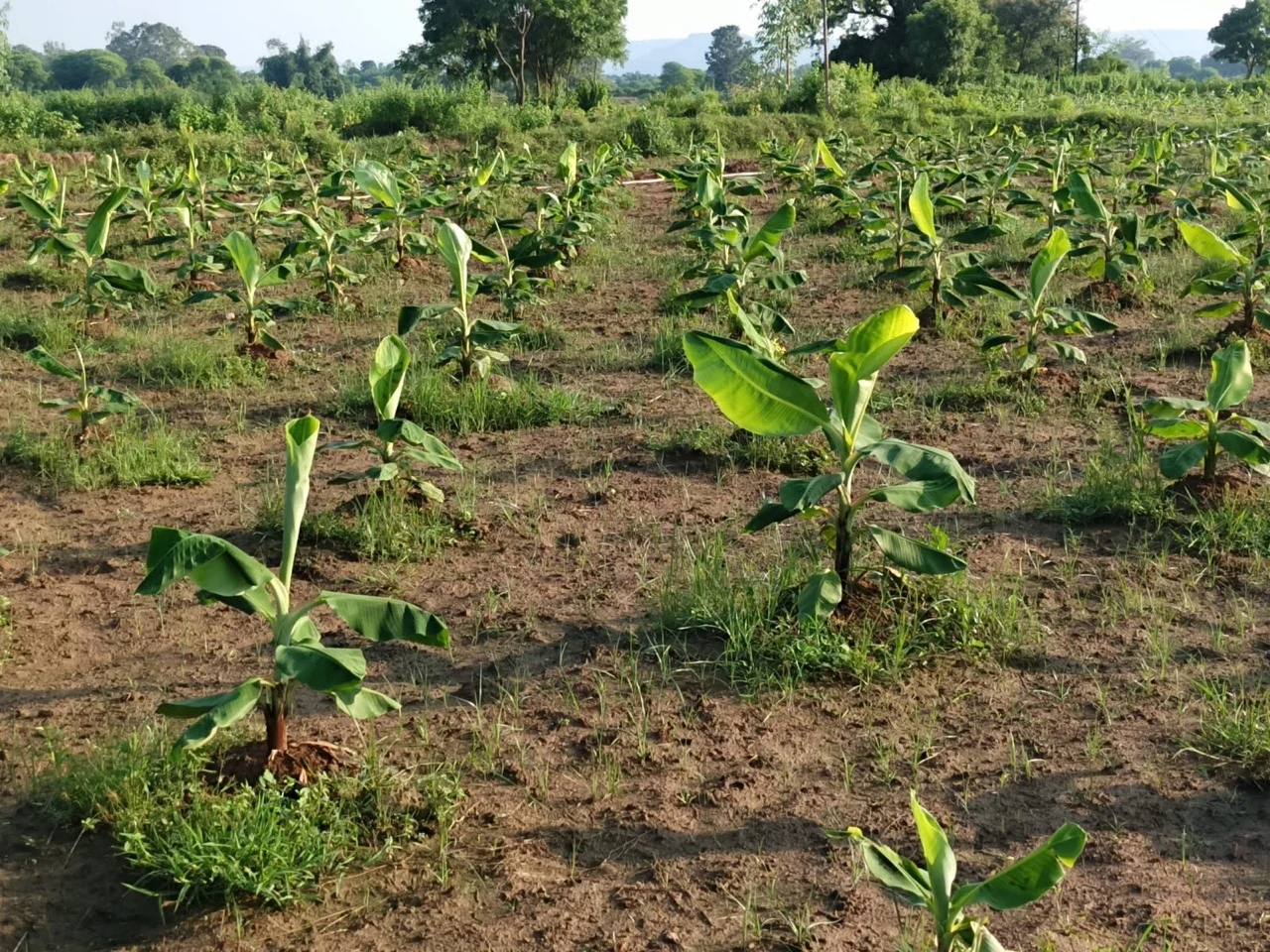

In the wide photographs, there is plenty of ground between the plants. The rows, the mounds around individual plants and the irrigation pipe are all easy to see. A young plantation has this open appearance: each plant is still a separate presence in the field.
Growth was not the same everywhere
A whole-field photograph can make differences look small. The closer views bring them forward. Broad green leaves sit alongside smaller plants; one photograph shows a short plant with dark, curled leaves.


In early August, establishment checks had already recorded losses and replacement plants. Yet the smaller plants still carrying fresh leaves in October were a reminder that size alone was not the whole picture. The newest leaf mattered too.
The leaves brought us closer
Infestation became part of the season’s story too. In one of the close-ups, a striped caterpillar is visible against the pale midrib of a banana leaf. Other photographs show openings through the leaf blade and missing tissue along an edge.
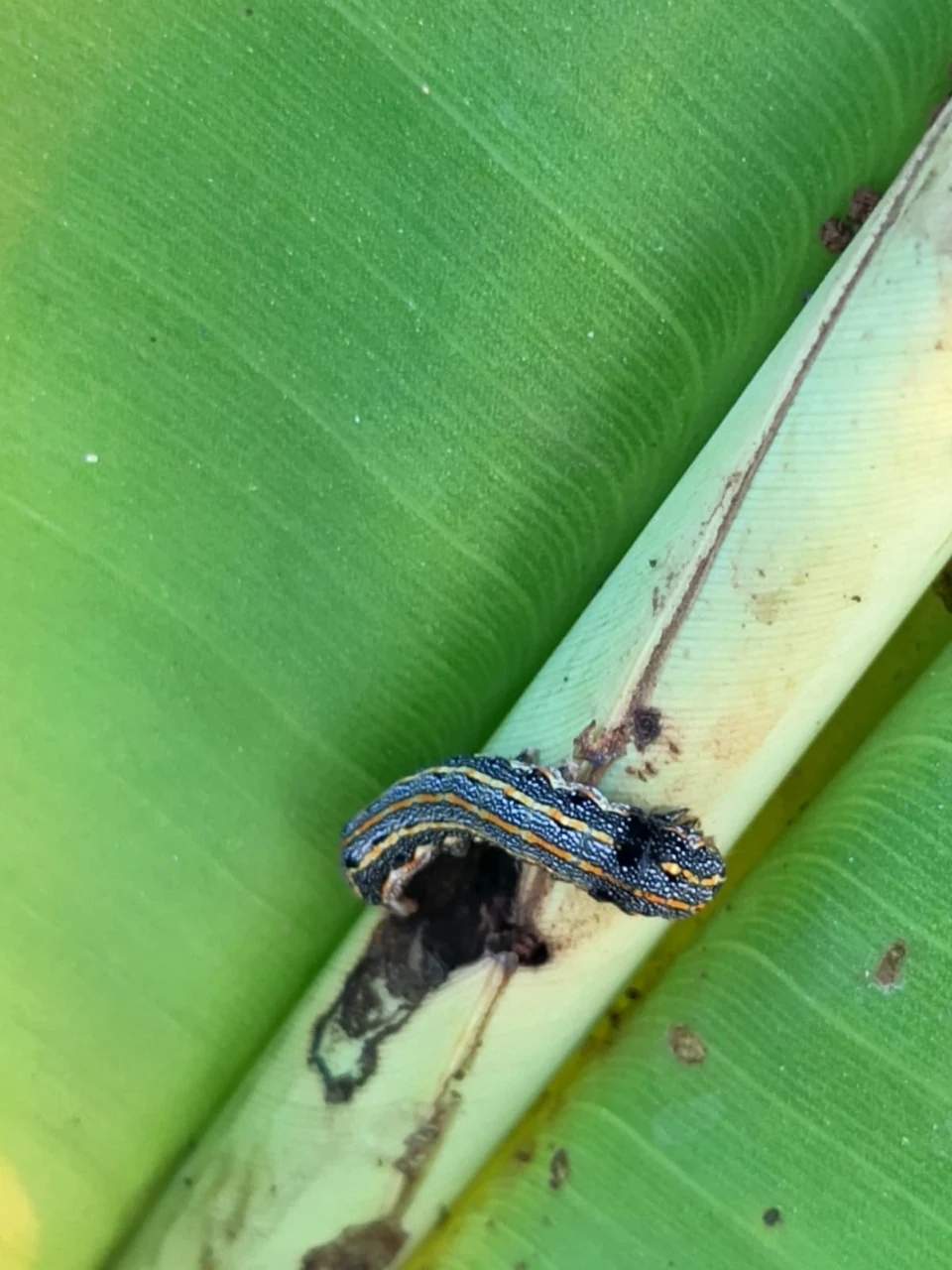


These are the details a view from the field boundary would miss. Looking at the leaf means noticing where the damage sits, whether an insect is still present and how the newer leaves compare. It also means looking beyond the most striking photograph. The presence of this caterpillar does not explain every hole, dark patch or curled leaf in the collection.
Water and weeds were part of the same season
The planting needed water during establishment, but the monsoon later brought another problem. In August, the notes recorded standing water and active drainage work. By early September, saturated ground delayed soil feeding while weed clearing continued around the plants.
Seen against those notes, the ground in the photographs deserves as much attention as the leaves. Some views include grass and other growth around the planting; others show more exposed soil.
The work kept changing with conditions. By 18 October, the second top-dressing and earthing-up were recorded complete, while irrigation was continuing. The season was still under way.
Another leaf to follow
Two quieter photographs bring us back to growth: an upright leaf beginning to open, and a small shoot beside the pseudostem. They are details worth returning to, alongside the damaged leaves and weaker plants.


For now, the story stays with the growing crop: across the rows, down to the ground, and close enough to see what is living on a leaf.
Photographs from the farm archive, selected for this story. Individual capture dates are not established; these views are not presented as a before-and-after sequence.
Look closer at banana leaf marks
About this story
Owner identified the supplied photographs as banana and explicitly confirmed infestation. The story uses ten selected undated photographs and dated milestones from the curated secondary farm archive: planting 11–17 July 2026; initial irrigation/foliar round complete 20 July; establishment losses checked in August; standing water and drainage in August; soil feeding delayed by saturation in September; smaller plants with active leaves on 2 October; second top-dressing and earthing-up complete, irrigation continuing on 18 October. Individual photographs are not assigned dates, a pest species, a common cause or treatment outcomes.
From the farm’s dated working notes.