When the rain changed the plan
Water stood between young banana plants, and feeding had to wait. Follow the recorded decisions through a wet spell and the work that followed.
What we saw
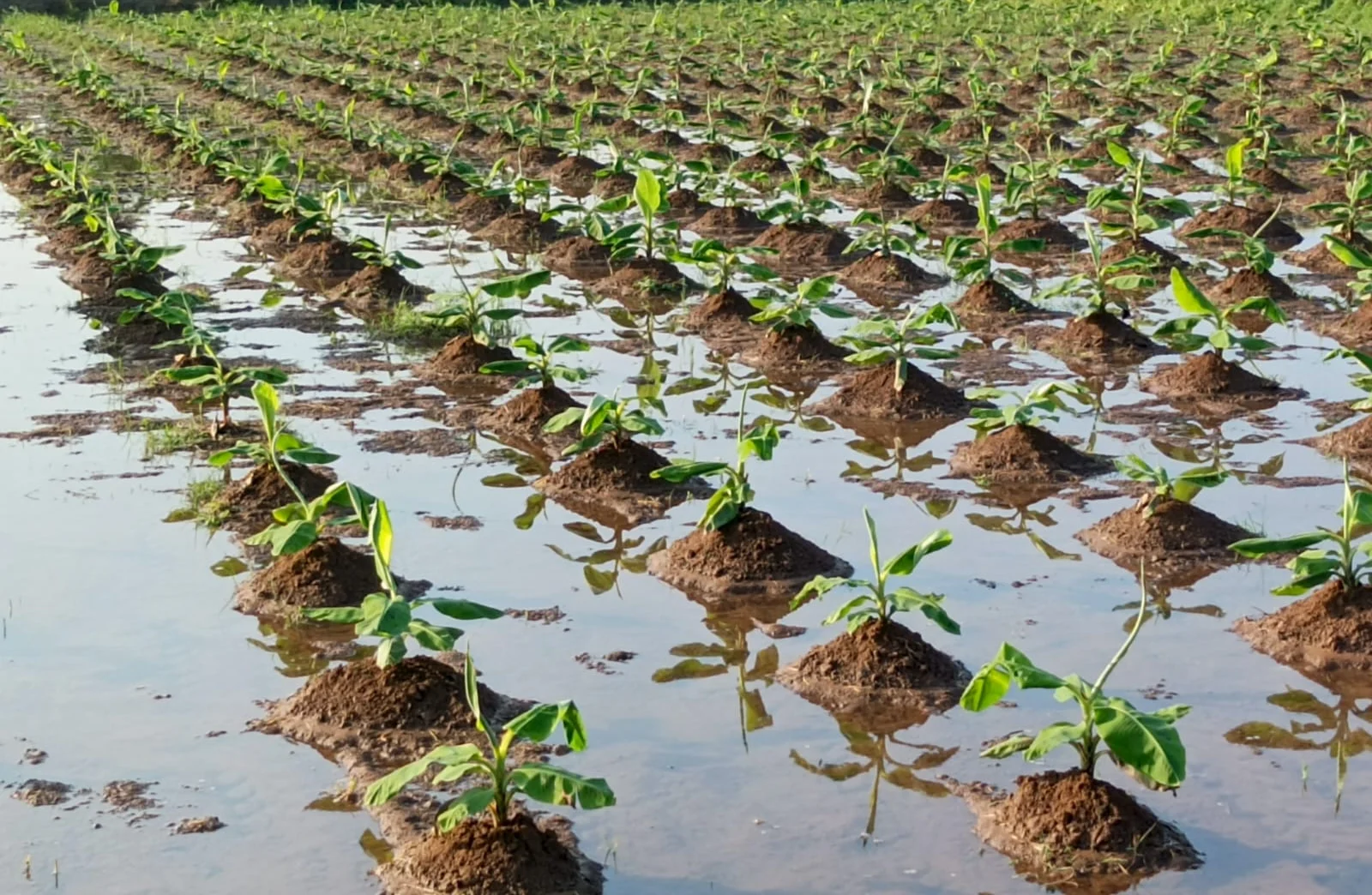
An undated image shows pooled water. The 20 August record describes about a week of standing water after repeated rain.
What was recorded
Drainage work, deferred soil feeding, a later completed top-dressing and an irrigation plan replaced by rain.
What remains unknown
Measured root injury, drainage effectiveness, nutrient losses and recovery attributable to any one operation.
In this field case
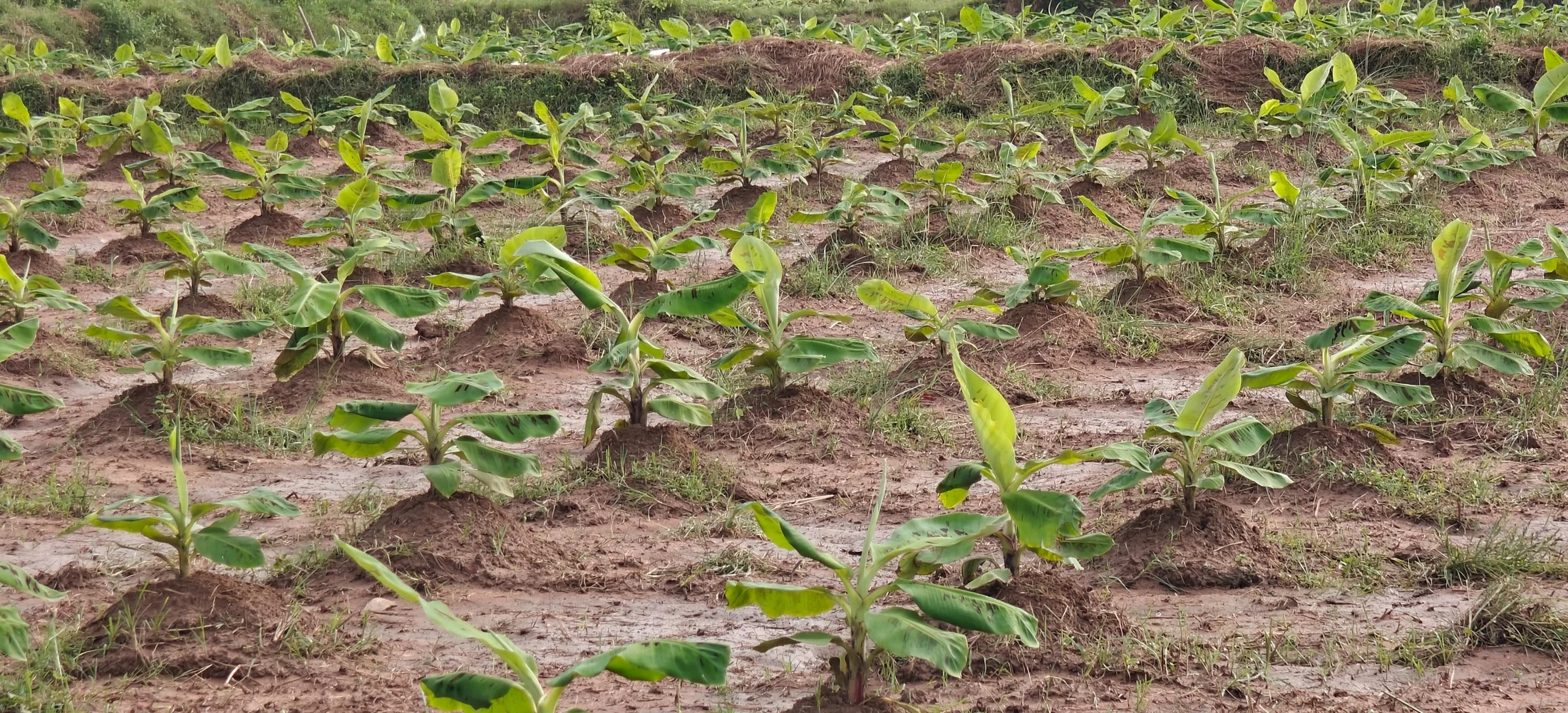
Young banana plants rise above pooled water. Between them, the ground has become part of the story. Before asking what to feed the crop, there is a more immediate question: what is happening around its roots?
By 20 August 2026, repeated rain had left water standing around the banana for about a week, and drainage work was underway. The undated archive photograph gives a view of wet conditions; the notebook supplies the chronology.
The work began with the ground
Banana needs water, but continuously wet, poorly drained soil creates a different problem from a crop receiving an irrigation. UF/IFAS identifies flooding and poor drainage as risks for banana. RHS explains why saturated soil matters to roots: less air is available for them to function. [1, 2]

That helps explain the concern. There was no root assessment for the pictured plants, and the separate dated entries do not establish uninterrupted saturation through the weeks that followed.
Feeding moved with the weather
On 7 September, saturated conditions delayed soil fertiliser. Weed clearing continued, with foliar feeding described in the interim.
The first soil top-dressing began on 19 September and was reported complete across the plantation on 22 September. Irrigation was next on the job list. Two days later, rain made it unnecessary. The weather had changed the plan again.
The work continued into October
On 18 October, a later round of top-dressing and earthing-up was complete, with irrigation continuing. It was another step in the season, separate from September’s application.
The record tracks the work, rather than measuring root injury, nutrient loss or recovery attributable to drainage or feeding. Smaller plants may have had more than one difficulty to contend with.
A useful lesson to carry forward
Rain, ground conditions, feeding and irrigation could not be treated as independent boxes on a calendar. Each decision changed the next job. Recording how long water stands, how drainage progresses and how the same marked plants grow would make that sequence easier to understand in a future season.
The work, in sequence.
Drainage underway
Standing water after repeated rain was the immediate field concern.
Soil feeding deferred
Saturated ground delayed fertiliser; weed clearing and interim foliar care were recorded.
Soil application began
The first soil top-dressing resumed after the wet delay.
First round complete
Plantation-wide completion was reported; irrigation remained the next planned task.
Rain changed the next job
Rainfall made the planned irrigation unnecessary.
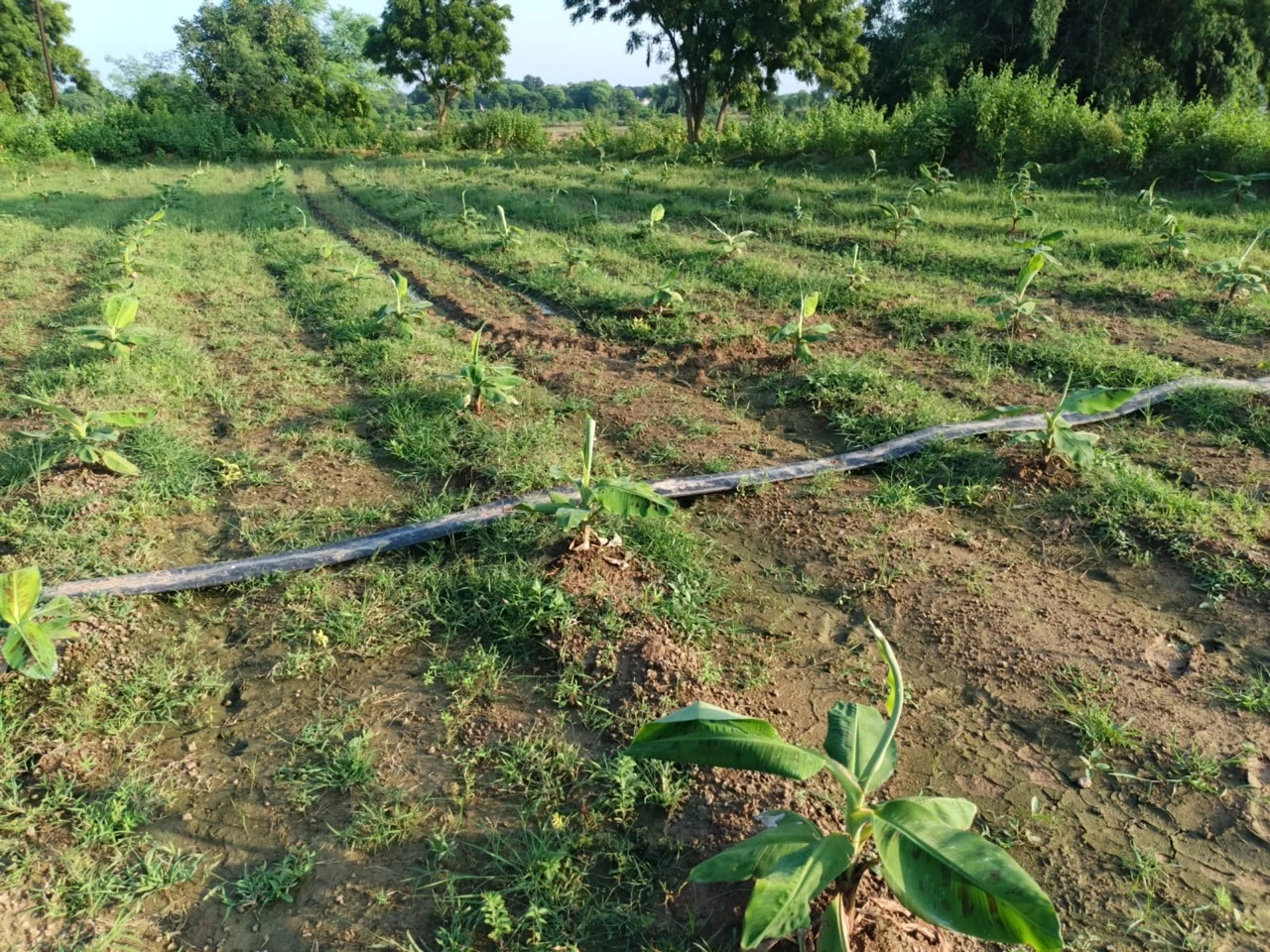
Dates belong to the farm entries. The photographs are undated archive views, presented without a before-and-after claim.
About this story
This field case draws on the owner’s farm notes and original photographs. Dates refer to farm entries; individual image capture dates are unverified. Linked research explains general principles. No measured treatment result is established.
From the farm’s dated working notes.Sources & further reading
- UF/IFAS · Banana growing Accessed 2026-10-24
- RHS · Waterlogging and flooding Accessed 2026-10-24