What a marked banana leaf can tell you
Start with leaf age, pattern and new growth. A practical guide to useful observations before naming a nutrient problem or disease.
In this guide
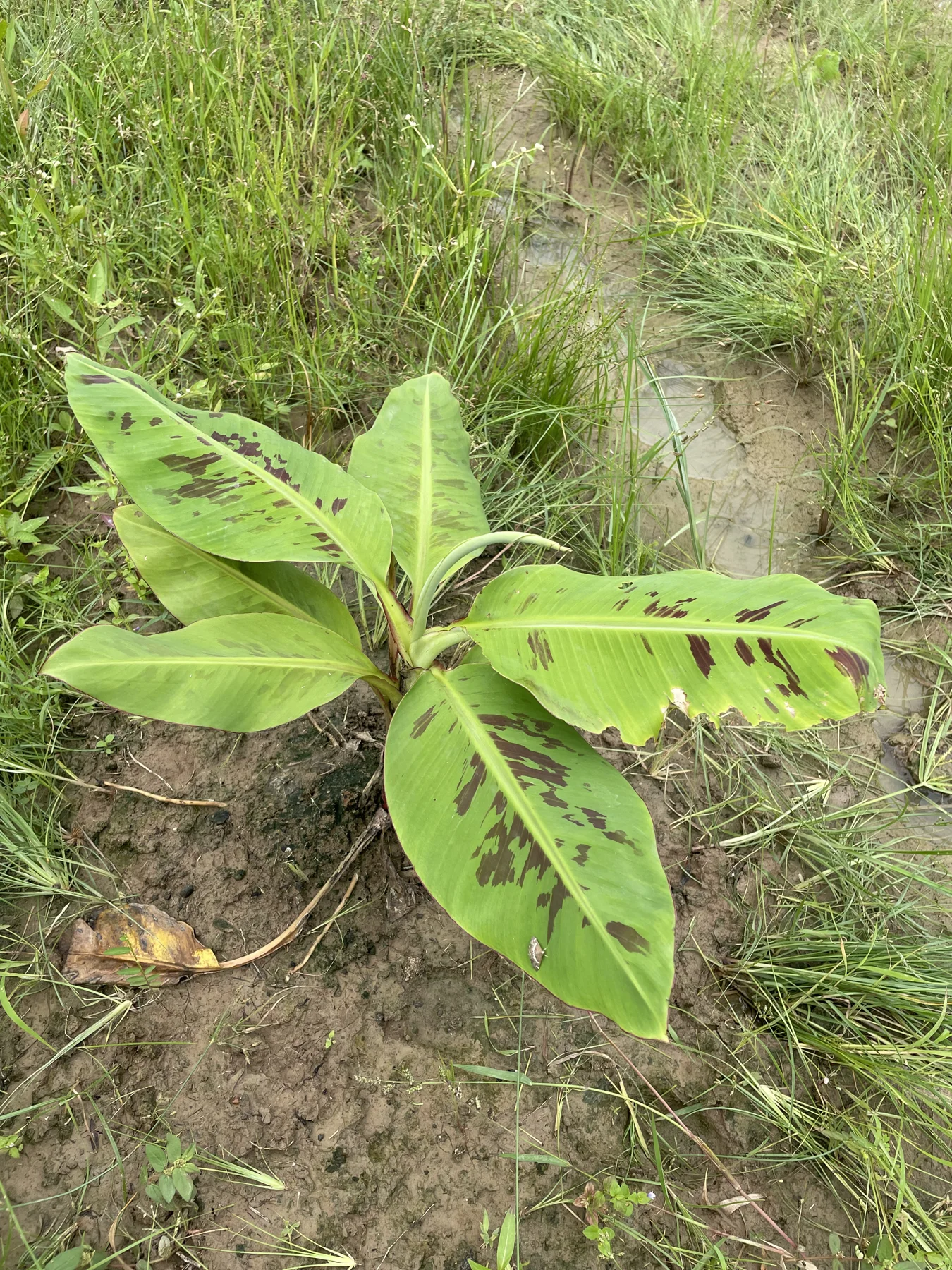
A banana leaf can hold a hole, a brown spot and a torn edge in the same broad blade. Those marks may have different histories. Their position on the leaf, the age of that leaf and the plant around it help turn a striking close-up into something that can be assessed.
Begin with a description
A mark on a newly emerging leaf raises a different question from one on an older, lower leaf. Its starting point matters too: tip, margin, spaces between veins or separate spots. Both surfaces, the midrib and leaf stalk help complete the view.
Then step back. Is one plant affected, a short run of plants or much of the planting? Does the pattern follow an exposed edge, a wet patch or a recent operation? These are questions to investigate, rather than answers supplied by the photograph.
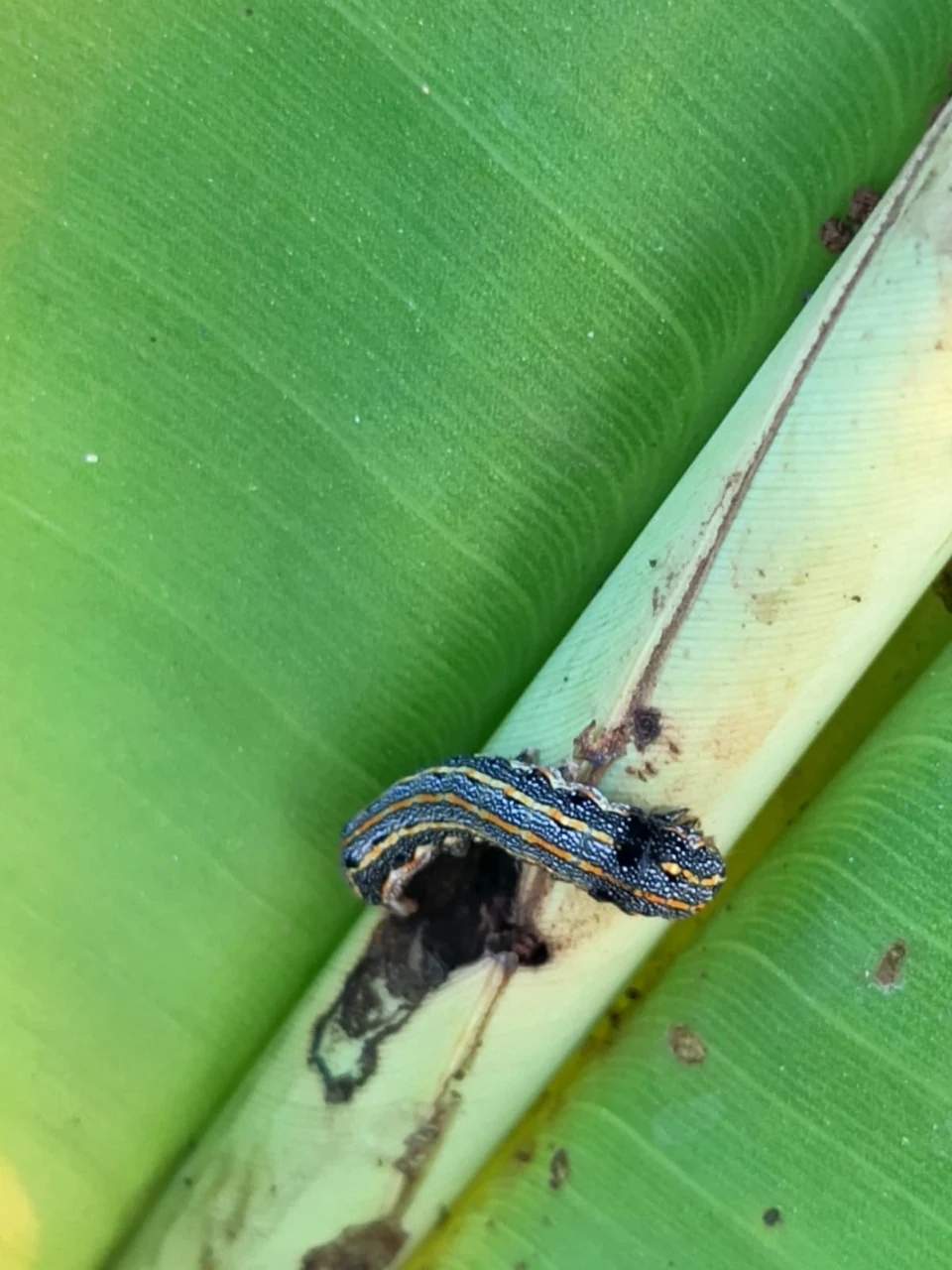
Three views worth comparing.
A caterpillar, openings through a leaf and missing tissue at an edge. These photographs do not establish a shared cause. Compare the visible features, then bring the whole plant and its recent history into the assessment.


Read pattern without prescribing a nutrient
TNAU’s banana nutrient guide describes different patterns associated with deficiencies, including older-leaf tip and margin changes in potassium deficiency and changes in young leaves in several other disorders. It also describes the use of soil and leaf analysis to confirm visual assessments. Symptoms can guide the investigation; they should not turn directly into a shopping list. [1]
A growth comparison needs the same care. Our secondary archive reports smaller banana plants still producing active new leaves in early October 2026. Short height was an observation. It did not establish a specific deficiency, a permanent failure or a need to replace every shorter plant.
Spots need context too
TNAU describes yellow Sigatoka lesions that develop pale centres and yellow surrounds, with spots sometimes joining into larger dead areas. Such descriptions help identify features worth photographing and sampling. They do not establish that a similarly coloured farm leaf has that disease. [2]
University of Florida guidance lists several possible banana stresses, including wind damage, cold injury, salt effects and leaf diseases. It is written for Florida, so its local risk profile and treatment instructions should not be transferred to another farm. Its broader lesson is useful: marks with different causes can share colour or shape. [3]
Follow the newest growth
Choose a few representative plants for repeat photographs and keep their identities in a private notebook. Compare newly opened leaves with older marked ones. Record whether the mark is expanding, whether more leaves are involved and whether the plant is maintaining new growth.
New growth is useful evidence, but one healthy new leaf does not prove that every underlying problem has resolved. Equally, an old scar does not mean the damaging process is still active. A dated series helps separate those possibilities.
Build a useful diagnostic record
- Whole plant and nearby plants, followed by both sides of an affected leaf.
- Leaf age, mark shape, position and distribution.
- Recent rain, irrigation and visible drainage conditions.
- Product names and dates of recent operations, without assuming a causal link.
- Changes in new growth and spread since the previous visit.
Spread to more plants or a change affecting the growing centre calls for local crop assessment and advice on handling samples. The photographs and plant history can travel with that enquiry, while the possible explanations remain open until a diagnosis is supported.
About this story
The secondary farm archive reports on 2 October 2026 that smaller banana plants retained active leaves and fresh growth. It does not establish the cause of their height difference or diagnose particular photographed leaf marks.
From the farm’s dated working notes.Sources & further reading
- TNAU · Banana nutrient symptoms and assessment Accessed 2026-10-23
- TNAU · Yellow Sigatoka symptom description Accessed 2026-10-23
- University of Florida IFAS · Banana growing and environmental stresses Accessed 2026-10-23