Journal / FIELD READING
Banana: learning to look closer
Young plants, uneven growth and an infestation that brought us closer to the leaves. A photo story from a plantation still finding its way.
Farm story · 3 min read Crop & CanopyA life in growing
A young plantation and the care that continues as the seasons change. Explore planting material, establishment and notes from our farm.
Musa spp.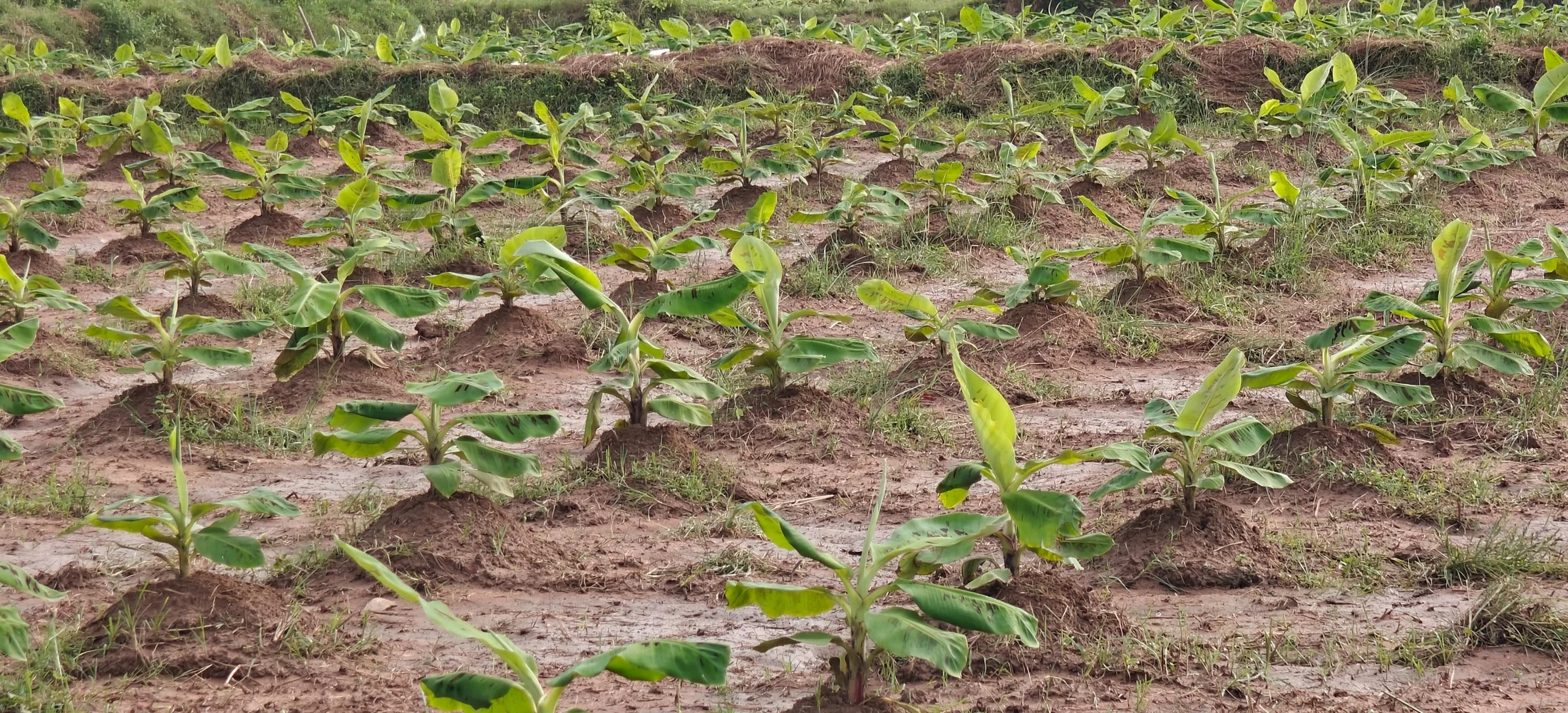
A banana planting begins with individual plants and open ground between the rows. As new leaves unfold, the canopy grows and the work changes: establishment, water, weeds, nutrition, then the flowering stalk and developing bunch. What looks like a trunk is a pseudostem made from tightly wrapped leaf sheaths. Below ground, the rhizome produces roots and new shoots, allowing another generation to follow the fruiting plant. On this farm, the 2026 story stays close to the young leaves and the ground around them. Understanding how the plant grows helps explain why that quieter care matters long before a bunch appears.
Follow the stages. Their timing changes with the variety, weather and growing conditions.
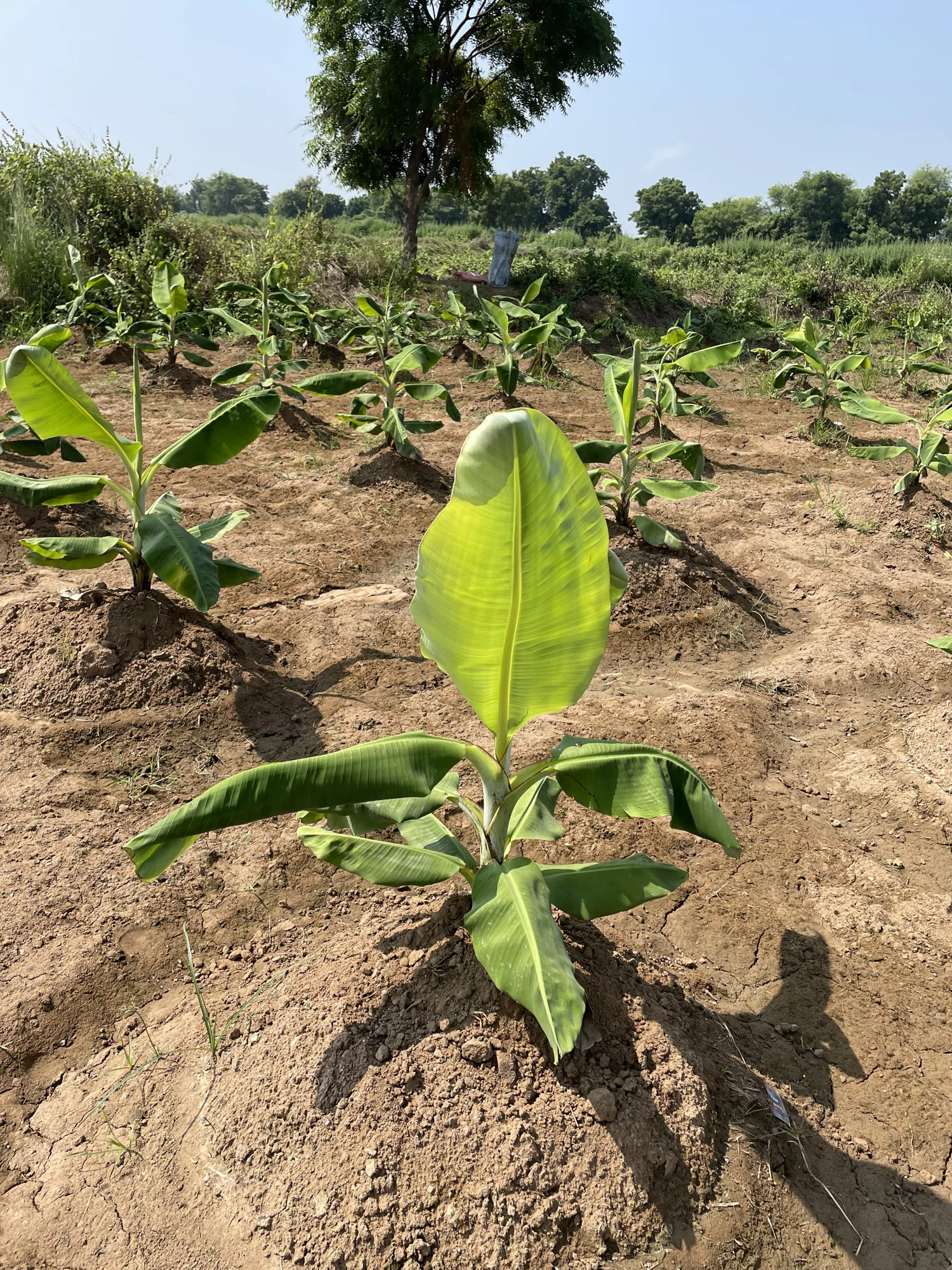
A young plant begins extending roots into the surrounding soil while fresh leaves emerge from its centre. Establishment depends on moisture reaching those roots without leaving them in stagnant water. This is also the time to replace confirmed planting losses.
Each rolled central leaf opens into a broad blade, while overlapping leaf sheaths build the pseudostem. The expanding canopy captures light to support growth. Weeds, dry ground and poor drainage can all make this early work harder for the plant.
The flowering stalk rises through the pseudostem. Groups of flowers develop into hands—the clusters of fruit on a bunch—and individual fruits are the fingers. As the fingers fill, their shape becomes fuller and the bunch becomes heavier.
Fruit is harvested at a maturity suited to its journey and intended use, then continues towards eating ripeness. Each fruiting pseudostem carries one bunch. A selected follower shoot growing from the rhizome can carry the next crop.
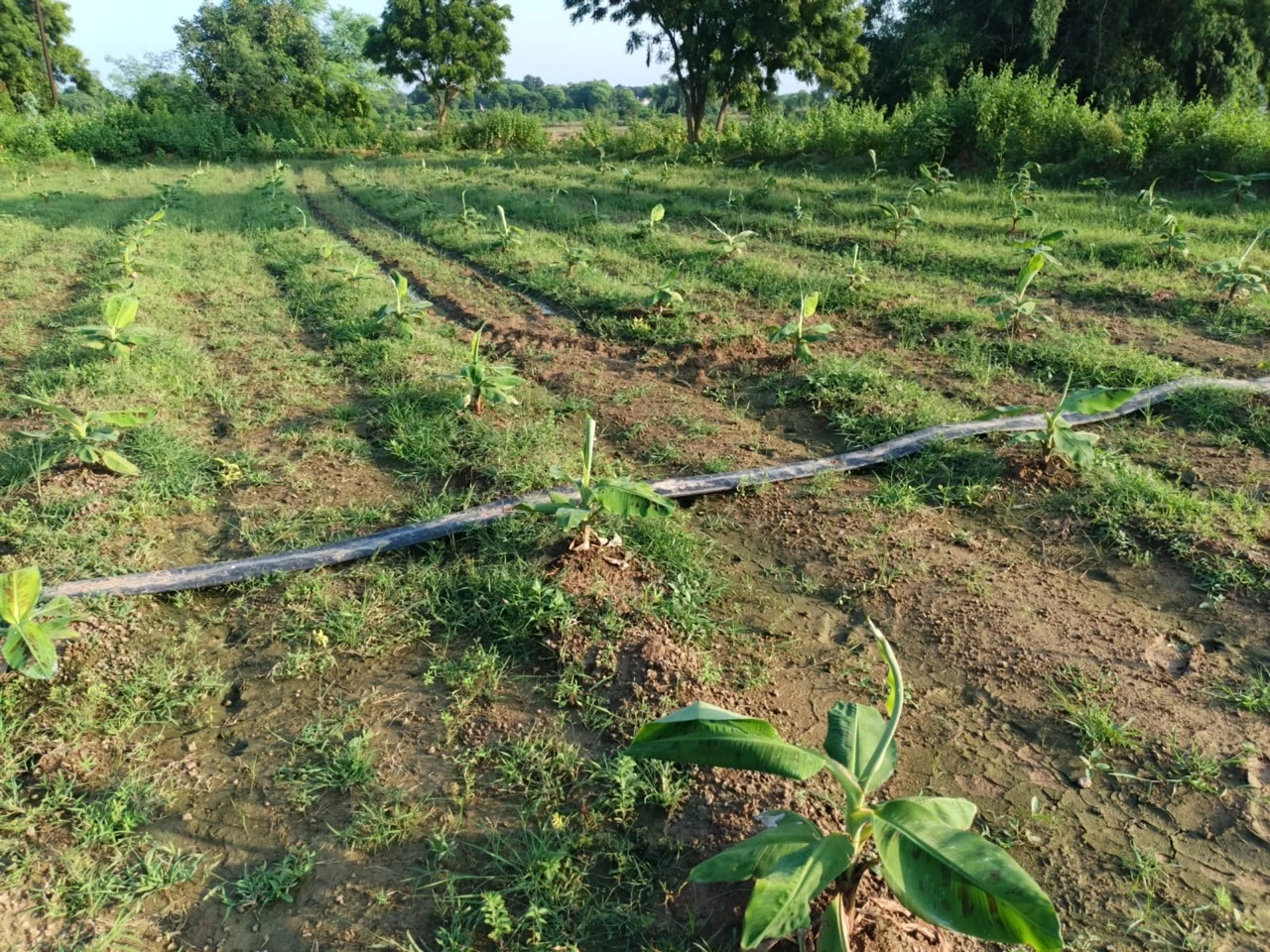
Young roots need reliable moisture, while a growing canopy and filling bunch increase the plant’s demand. Match irrigation to rain, soil and crop development. Keep outlets open so supplying water does not leave the root zone saturated.
Banana develops a large leaf canopy and later fills a heavy bunch. Base nutrient supply on soil conditions, crop stage and local advice, accounting for earlier inputs. Root access and drainage matter alongside the nutrients in the bag.
Weeds compete with young plants before their canopy shades the ground. Clear around the crop with care for shallow roots, and plan work between rows to suit the available space. Later, follower selection and bunch support become distinct jobs.
Land preparation led to a July planting, followed by establishment checks, wet-weather delays and continuing care. These are historical milestones. A bunch harvest and measured crop outcome are not established in the retrieved record.
Land levelling for the banana planting was reported complete.
The main tissue-culture planting was reported complete after phased work that began on 11 July. Reserve plants were retained for establishment losses.
Saturated soil delayed soil feeding.
The second feeding round began. A follow-up corrected the recorded phosphate component from DAP to APS 20:20:0:13.
The second top dressing and earthing-up were reported complete. Irrigation was still underway; this entry did not close every other field task.
These are dated entries from our farm. They describe this season’s work and results, rather than a schedule for another field.
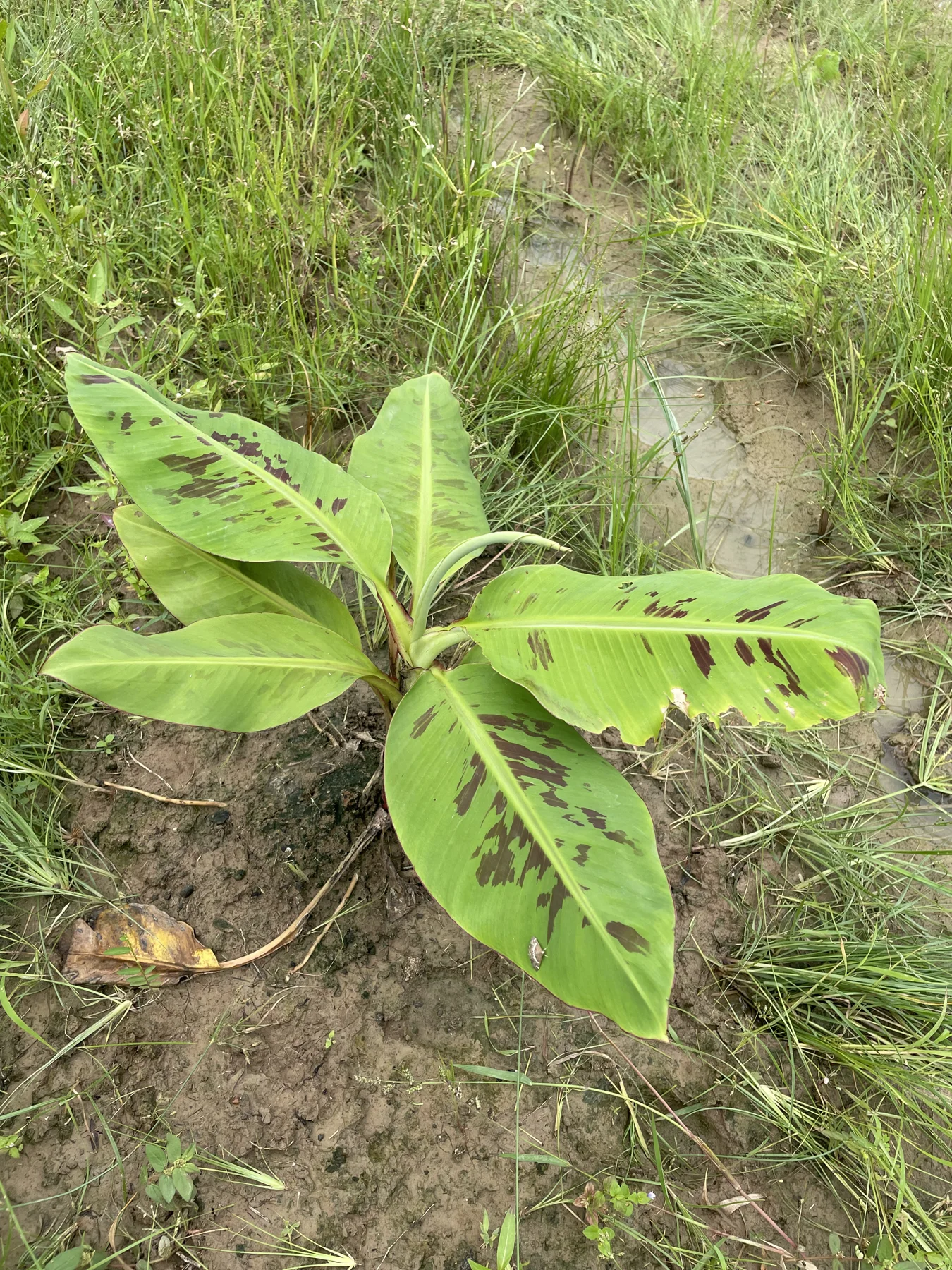
Record the leaf’s age, both surfaces and the pattern across plants. An insect on one leaf does not explain every hole or dark patch in a collection of photographs.
Read the field guide Read the field caseLook at drainage, the root environment and recent rain before treating slow growth as a nutrient problem. A wet patch and a small plant are observations to investigate together.
Read the field guide Read the field caseReconcile product labels and previous inputs before planning another round. Leaf colour alone cannot prescribe a fertiliser or establish the cause of weak growth.
Read the field guideThe fruit’s journey continues after bunch harvest: careful handling and ripening shape when it is ready to eat. Dessert bananas and cooking types have different uses. The variety and harvest of this planting need their own records before we can tell a farm-to-kitchen story.
Explore food & harvestYoung plants, uneven growth and an infestation that brought us closer to the leaves. A photo story from a plantation still finding its way.
Farm story · 3 min readA look at tissue culture, nursery hardening and choosing planting material with care.
Growing guide · 2 min readStart with leaf age, pattern and new growth. A practical guide to useful observations before naming a nutrient problem or disease.
Growing guide · 3 min readA straightforward guide to NPK, nutrient labels and choosing what your soil needs.
Growing guide · 3 min readGeneral growing information draws on the references below. Farm dates and quantities come from the owner’s working notes, also explained in the linked farm stories.