Roots need air as well as water
What prolonged saturation changes below ground, and why drainage deserves attention.
In this guide
Around a banana mound, water can be easy to see and its effect below ground harder to judge. As water fills soil spaces that normally hold air, prolonged saturation can leave roots short of oxygen. The wet surface is the visible beginning of that problem.
What prolonged saturation can do
The RHS describes poor growth, yellowing and root damage among the possible effects of waterlogging. Compaction and poor drainage can make it harder for water to leave. Those symptoms have other causes too, so a yellow leaf on its own is not a diagnosis. [1]
Start by watching the water
Notice where it collects, how long it stays and which plants are affected. Compare the same area during the wet period and after water has drained away.
Check accessible drainage outlets for blockages where it is safe to do so, and avoid working or trampling saturated soil. In pots, drainage holes and a suitable growing medium help excess water escape. Larger drainage changes need local assessment; a garden remedy is not a design for a whole farm. [1]
Rice is a different case
Managed standing water is part of many paddy-rice systems. FAO’s guidance explains water management in relation to rice growth stages. Crop, soil and water regime matter: standing water alone does not show that a rice field is being poorly managed. [2]
A wet spell in the farm notebook
On 20 August 2026, the farm archive records repeated rain and water standing around banana for about a week. Drainage work was under way. By 7 September, saturated ground was still delaying soil feeding. Those notes describe conditions and decisions; they do not establish a measured root injury or yield loss.
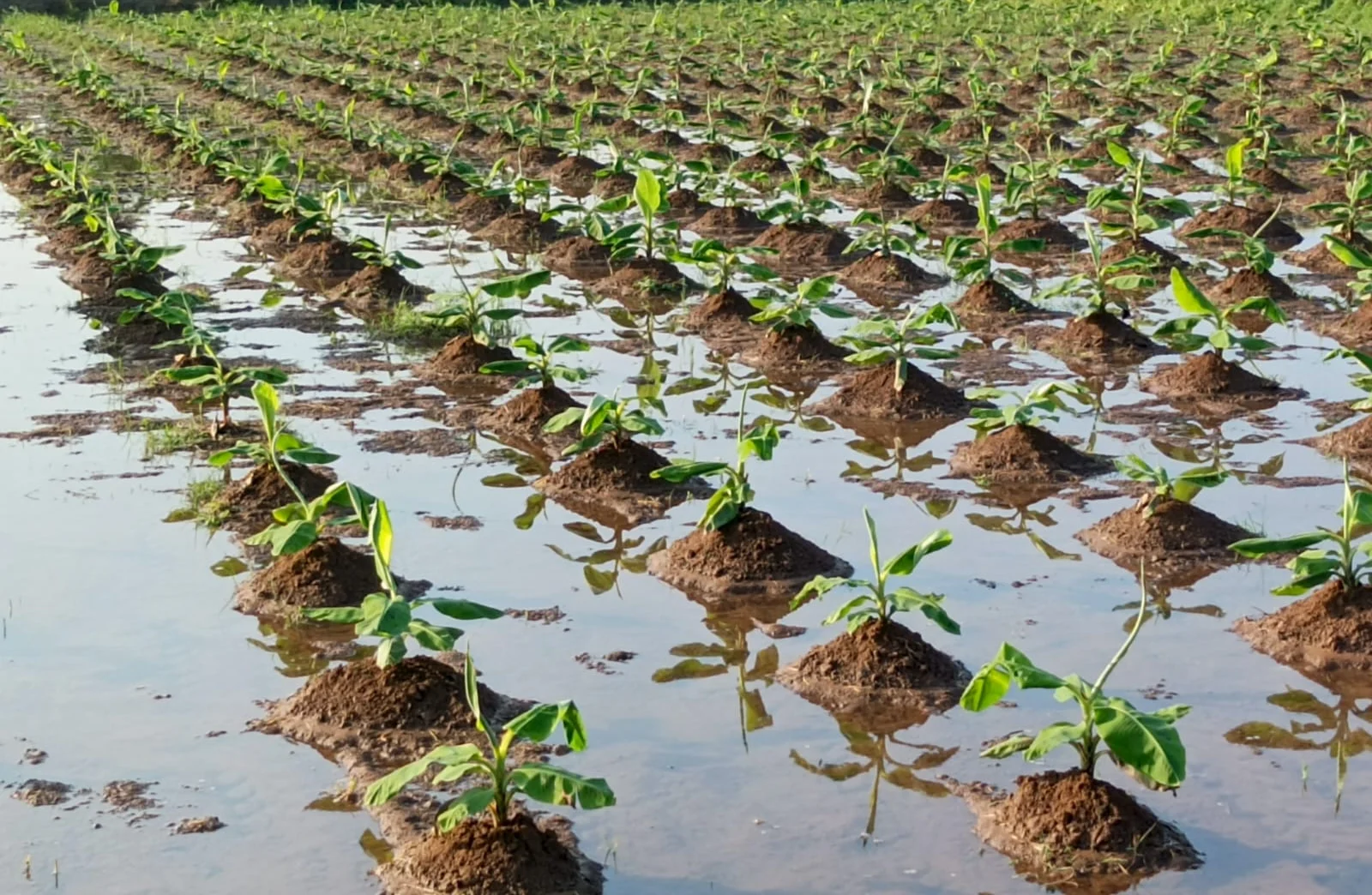
Our archive photograph shows water between banana mounds. Its capture date is unverified, so it illustrates the setting without being assigned to that particular wet spell.
When the water leaves
After drainage, the same patches can show whether the ground is becoming workable and whether new leaves are continuing to emerge. Persistent symptoms deserve further assessment; a single yellow leaf cannot settle their cause.
The surface may dry before the ground beneath it is fit to carry people or equipment. That difference matters when deciding which delayed job can begin.
About this story
The 20 August and 7 September 2026 farm archive entries document standing water, drainage and deferred soil feeding. The photograph is undated and is not assigned to those events.
From the farm’s dated working notes.Sources & further reading
- RHS · Waterlogging and flooding Accessed 2026-10-22
- FAO · Paddy rice growth stages and irrigation Accessed 2026-10-22