
Before the sprayer comes out
Leafroller, insecticides, fungicides and the observations that make a treatment record useful.
In this guide
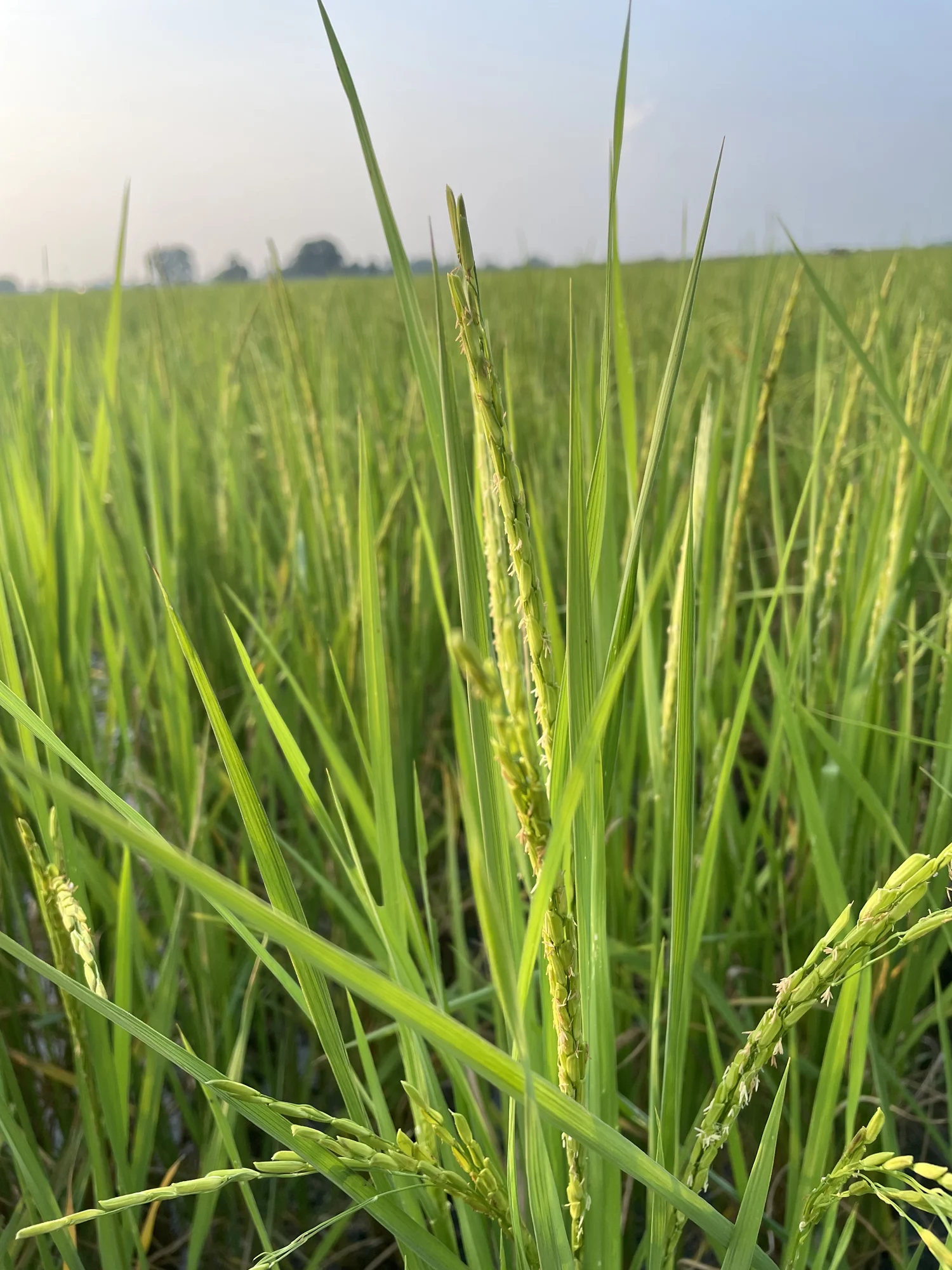
Leafroller scouting, a spray held up by rain, treatment moving between crops: September and October left more than one kind of pest entry in our paddy notebook. Following them means separating the insect problem from the application—and the application from its result.
Read the damage and the living pest
Rice leaffolder caterpillars fold leaves around themselves with silk and feed within the fold, leaving pale, lengthwise feeding marks. ICAR's insect-resource guide describes these signs. A damaged leaf is evidence to examine, rather than a measure of the whole field. [1]
Look in representative places, not only the worst patch. Record the crop stage, fresh damage, live insects and how widely the problem occurs. Old damage and continuing activity are different observations.
The farm's treatment story
The archive records leafroller scouting in early September, a spray delayed by rain, and treatment progressing field by field. By 18 October, the owner confirmed insecticide spraying in the affected Sonam crop.
That confirms an operation. It does not, on its own, establish pest control, a yield benefit or treatment of every paddy variety. A return visit is part of understanding the result.
Not everything in a spray tank does the same job
An insecticide targets insects; a fungicide targets fungal disease; a herbicide targets weeds. A nutrient spray supplies plant nutrients. Using the same equipment does not make these products interchangeable.
Our banana archive names chlorpyrifos in one historical insecticide round and Bavistin in a later entry described as a fungicide mix. These names help us read what was recorded. They are not recommendations for a crop, pest or mixture today: the exact formulation and current crop-use label must govern any decision.
Begin with the need, then the product
Integrated pest management brings scouting, crop management, natural enemies and treatment thresholds into the decision. TNAU explains why routine spraying without regard to need is different from this approach. If treatment is justified, it should target the identified problem while limiting effects on other organisms. [2]
Before using a product, establish its active ingredient, formulation, labelled crop and target, application directions and required intervals. Follow the label's protection, re-entry and harvest requirements. Keep equipment sound, prevent drift and contamination of water, and verify compatibility before considering a mixture. [2, 3]
Changing a brand name is not enough to establish a different active ingredient. Keep both names in the record.
Make room for the return visit
The later assessment needs the reason for treatment and the details of the application: crop and area, exact product, quantity and water volume, date and weather. Those details help an adviser interpret what is found afterwards.
“Sprayed” closes the application task. The next walk through the field tells us whether fresh activity has slowed, continued or moved elsewhere. That is where the next decision begins.
About this story
Leafroller chronology is grounded in the September–October 2026 archive and the owner’s 18 October confirmation. Named banana products are historical entries; their current suitability or approval for those uses has not been established here.
From the farm’s dated working notes.Sources & further reading
- ICAR–NBAIR · Rice leaffolder: damage and biology Accessed 2026-10-23
- TNAU · Integrated pest management and pesticide questions Accessed 2026-10-23
- Department of Agriculture, Meghalaya · Pesticide handling Accessed 2026-10-23